
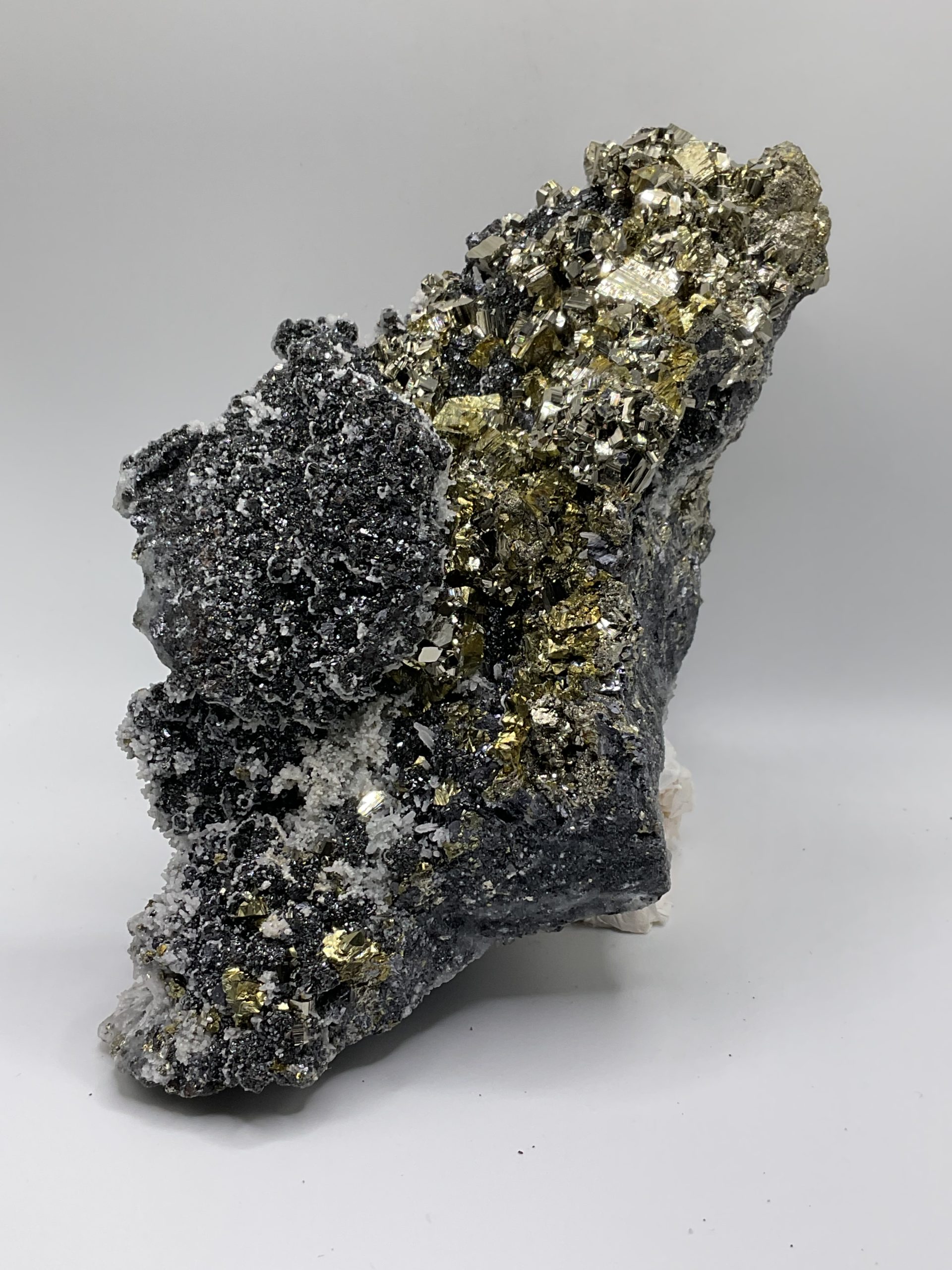
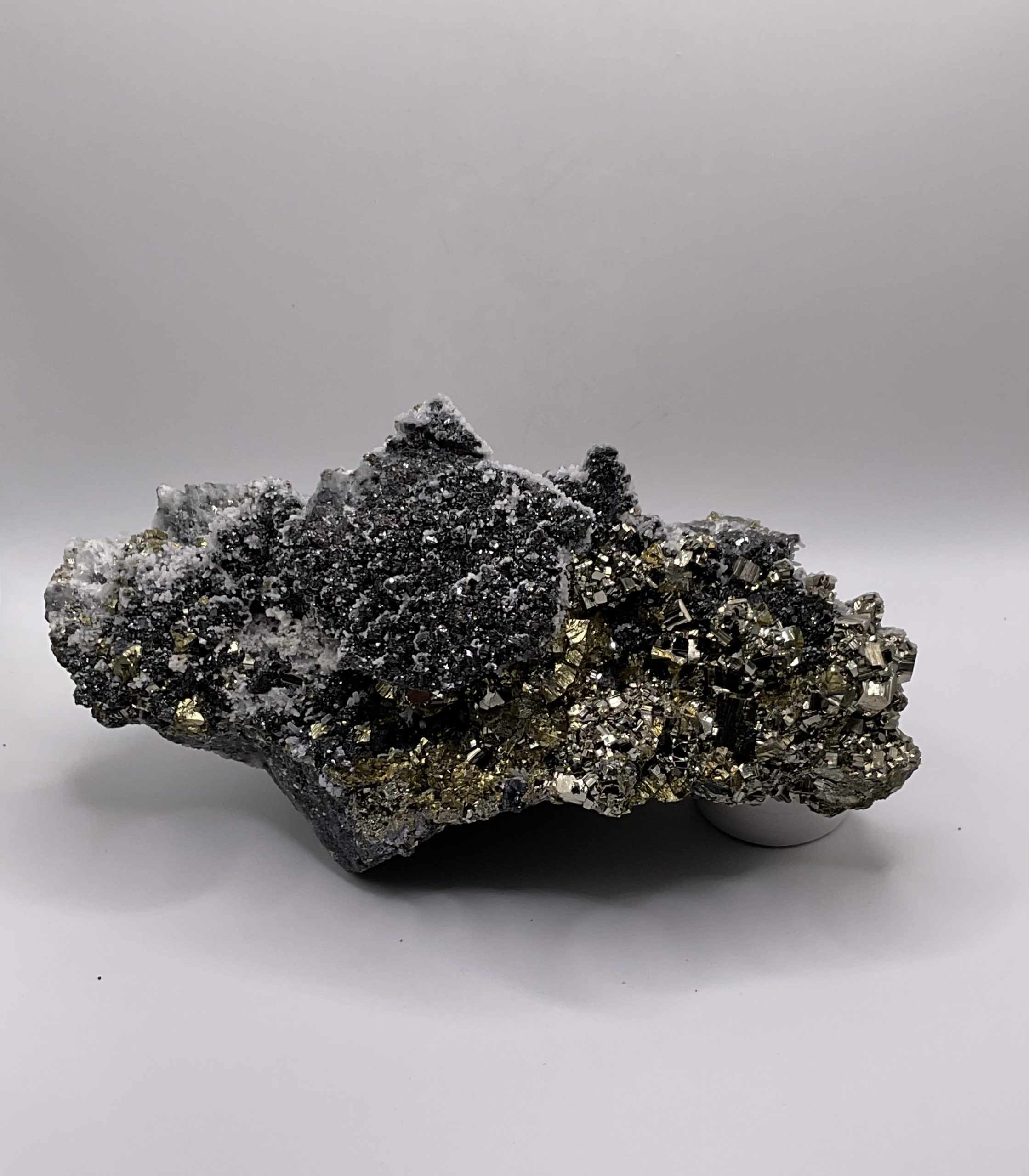
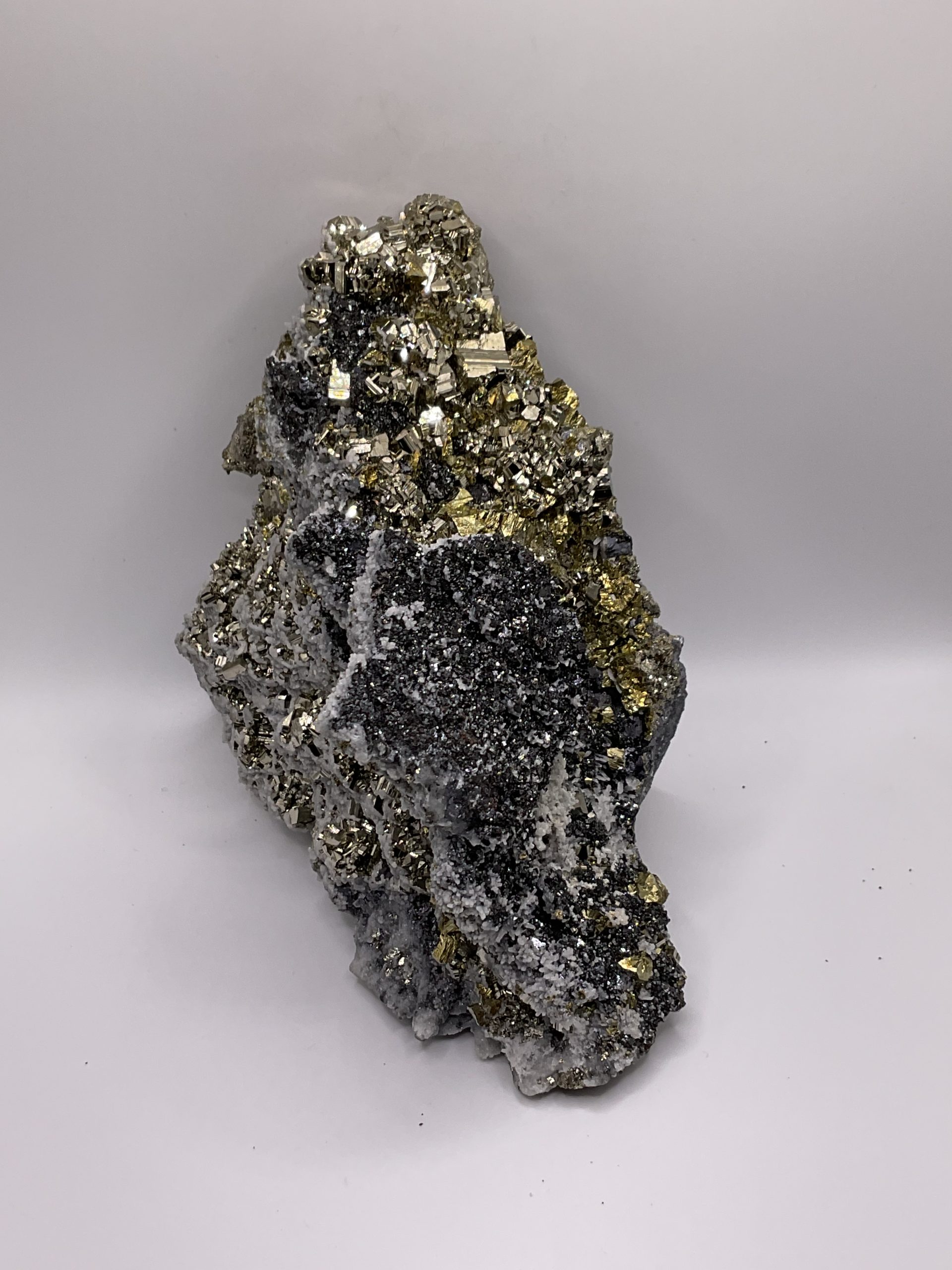
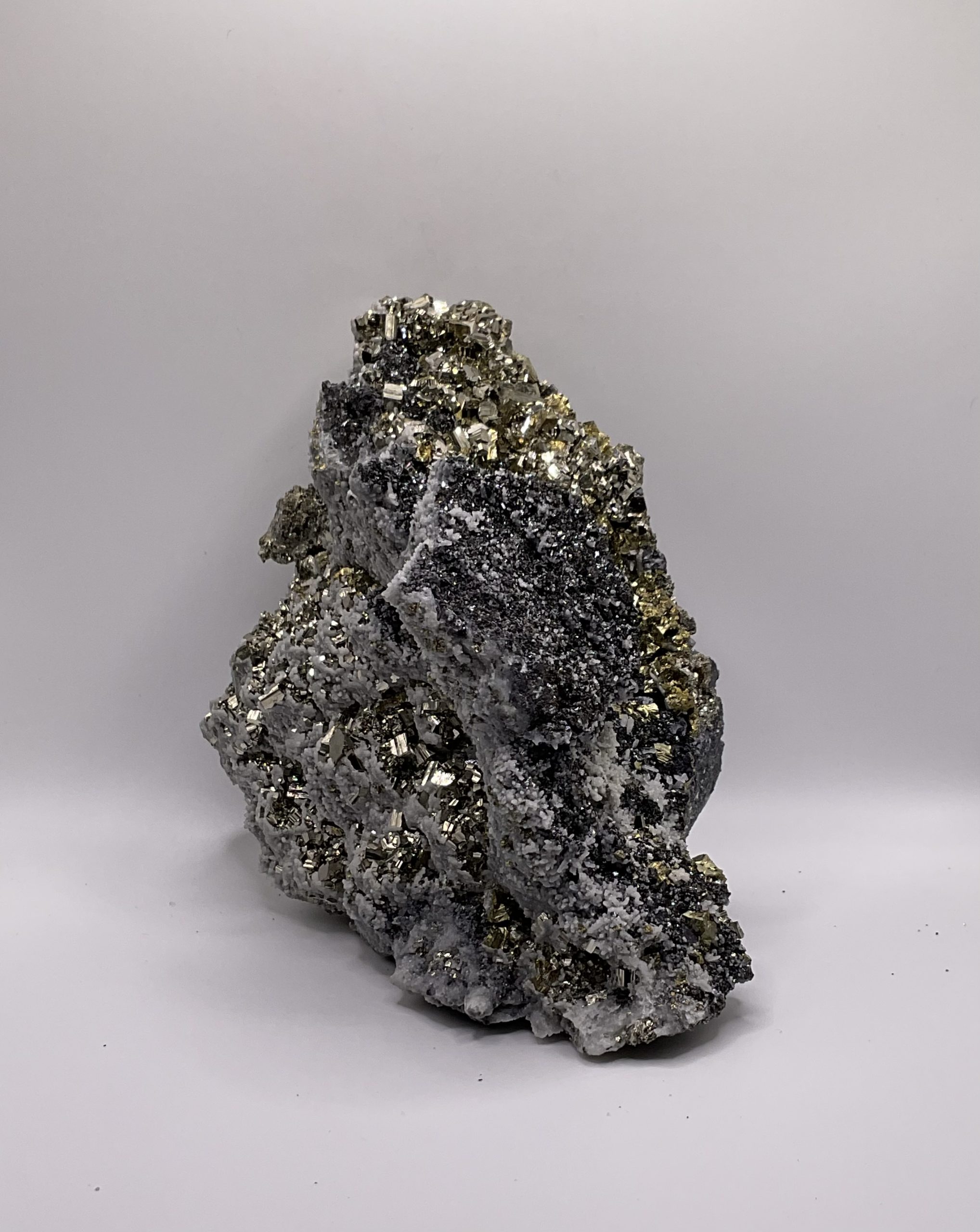
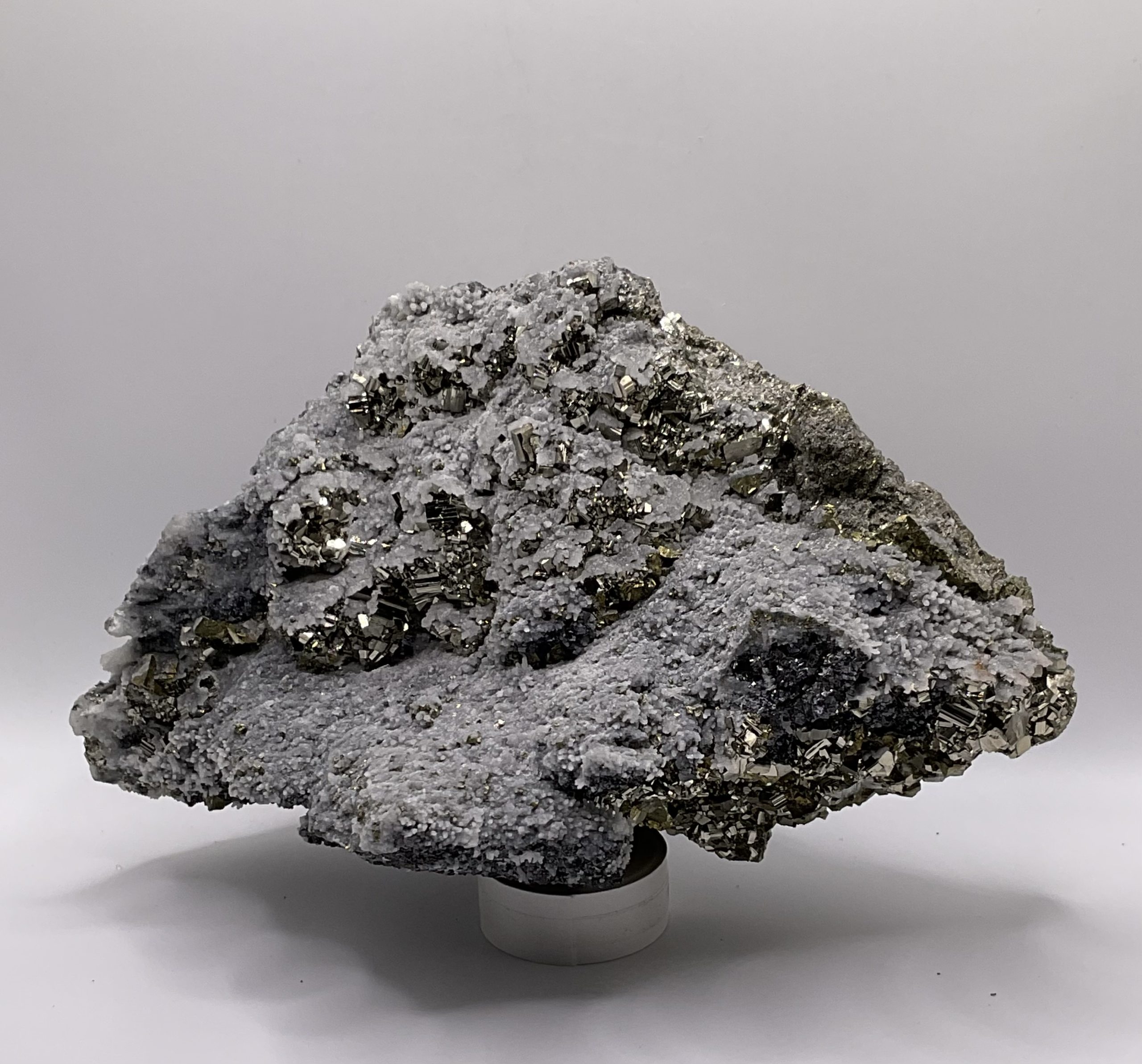
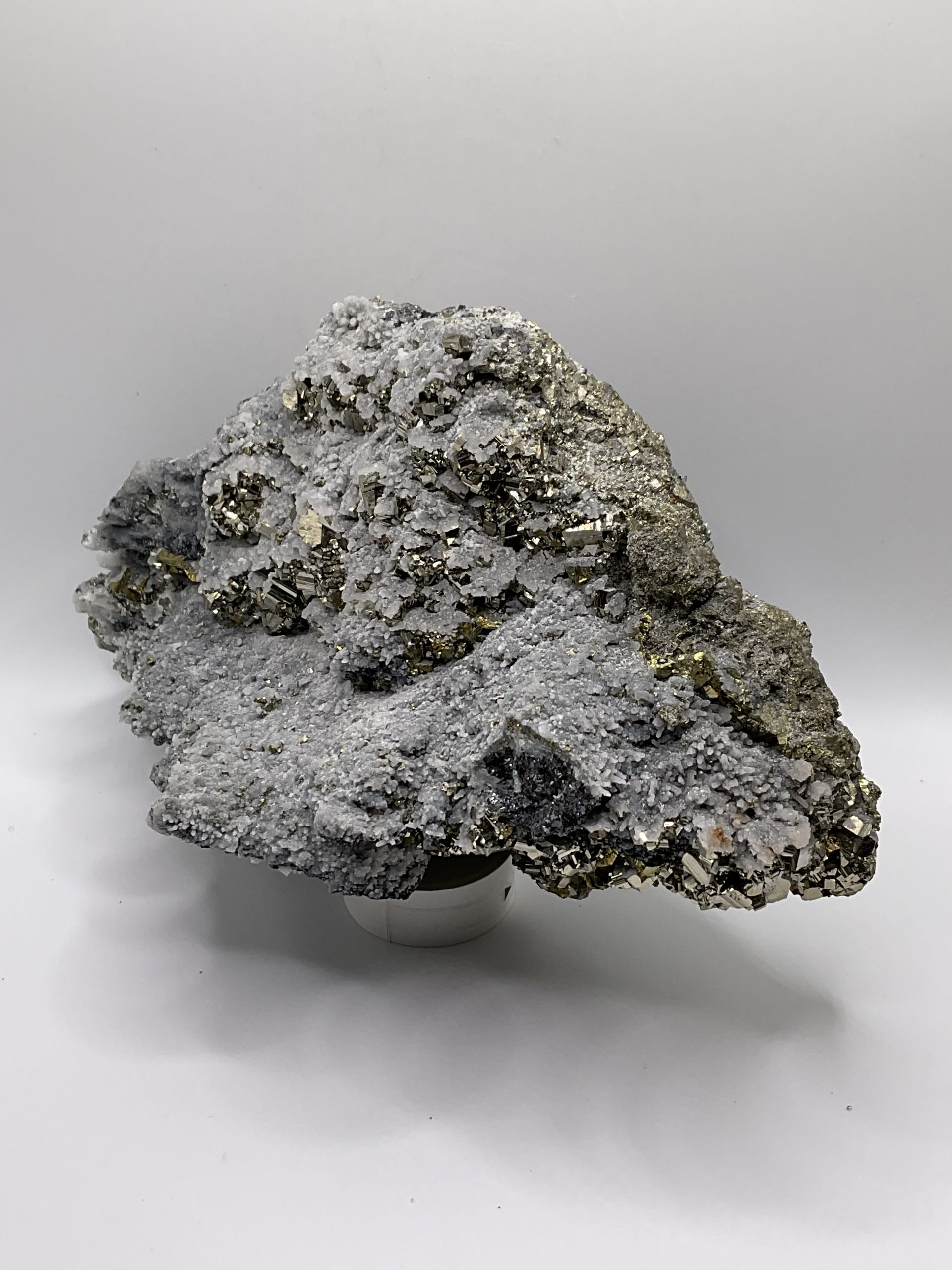
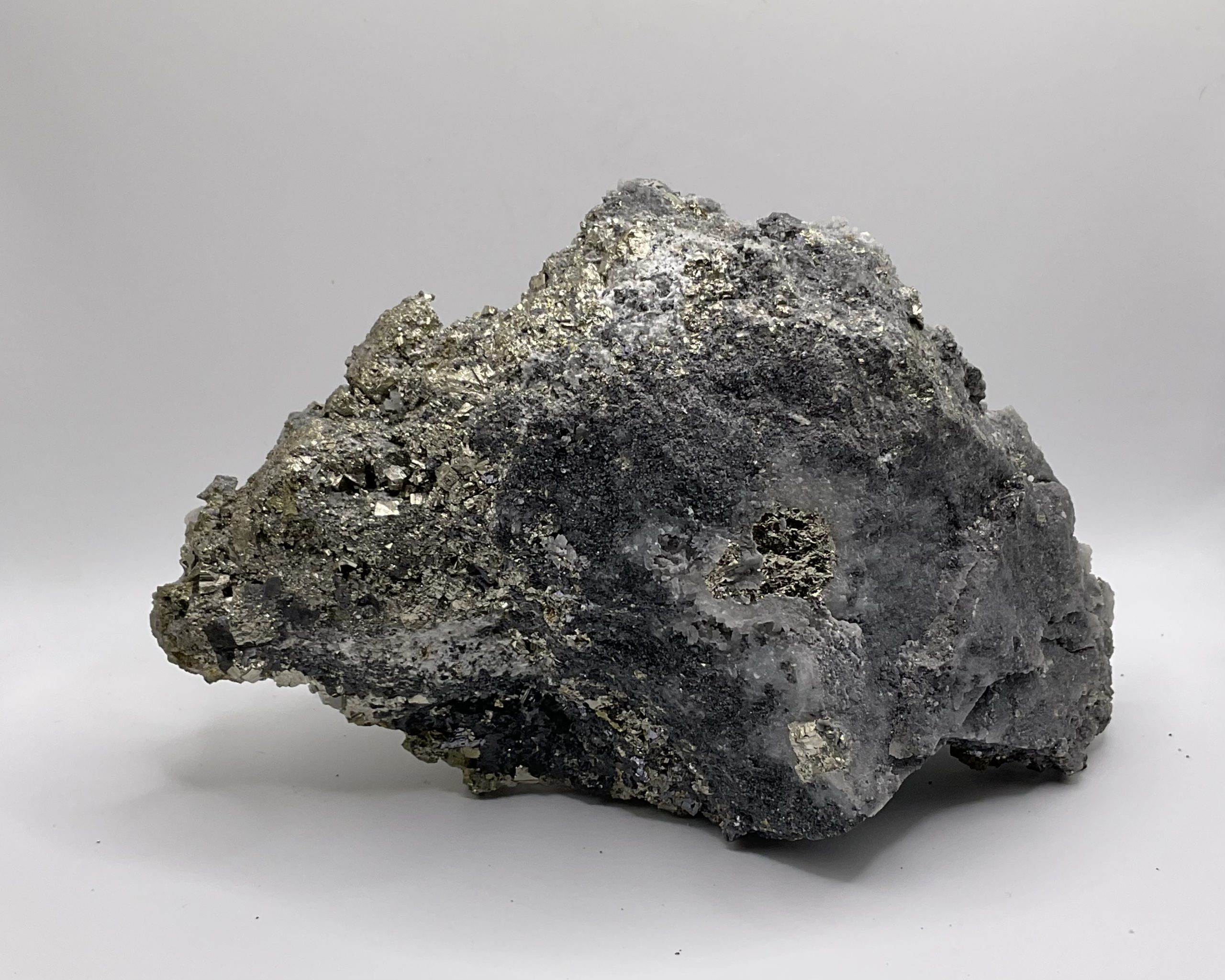
Description
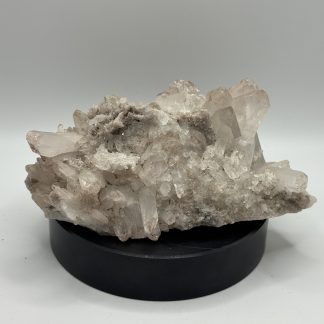
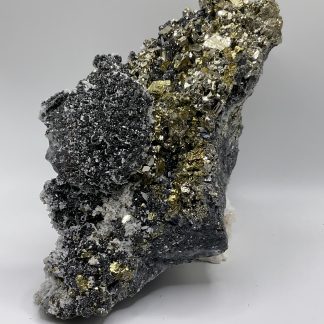
This specimen formed in low- to medium-temperature hydrothermal veins, where silica-saturated fluids transported and deposited zinc, iron, and sulfur over time. Variations in temperature, pressure, and fluid composition allowed the sequential crystallization of pyrite, quartz, and sphalerite. Quartz often acted as a host matrix, while pyrite and sphalerite crystallized within cavities and along vein margins.
Geographical Provenance
Specimens like this are typically found in classic sulfide-rich mining regions, including:
-
Spain (Asturias, Santander): Noted for pyrite–sphalerite–quartz specimens with well-formed cubic pyrite crystals
-
Peru (Huanzala, Cerro de Pasco): High-quality hydrothermal veins producing sharp metallic pyrite and transparent quartz
-
USA (Tri-State District, Missouri-Kansas-Oklahoma): Historic zinc and lead mining areas, producing sphalerite intergrown with pyrite and quartz
-
Germany (Harz Mountains, Saxony): Traditional European mining regions for sulfide mineral specimens
Educational Significance
-
Illustrates hydrothermal mineralization processes, including sequential deposition, crystal habit development, and trace-element incorporation.
-
Demonstrates sulfide-quartz associations typical of Zn-Pb-Fe ore deposits.
-
Provides insight into economic geology, as pyrite, sphalerite, and quartz often co-occur in zinc, iron, and sulfur-bearing ore bodies.
Reviews
There are no reviews yet.