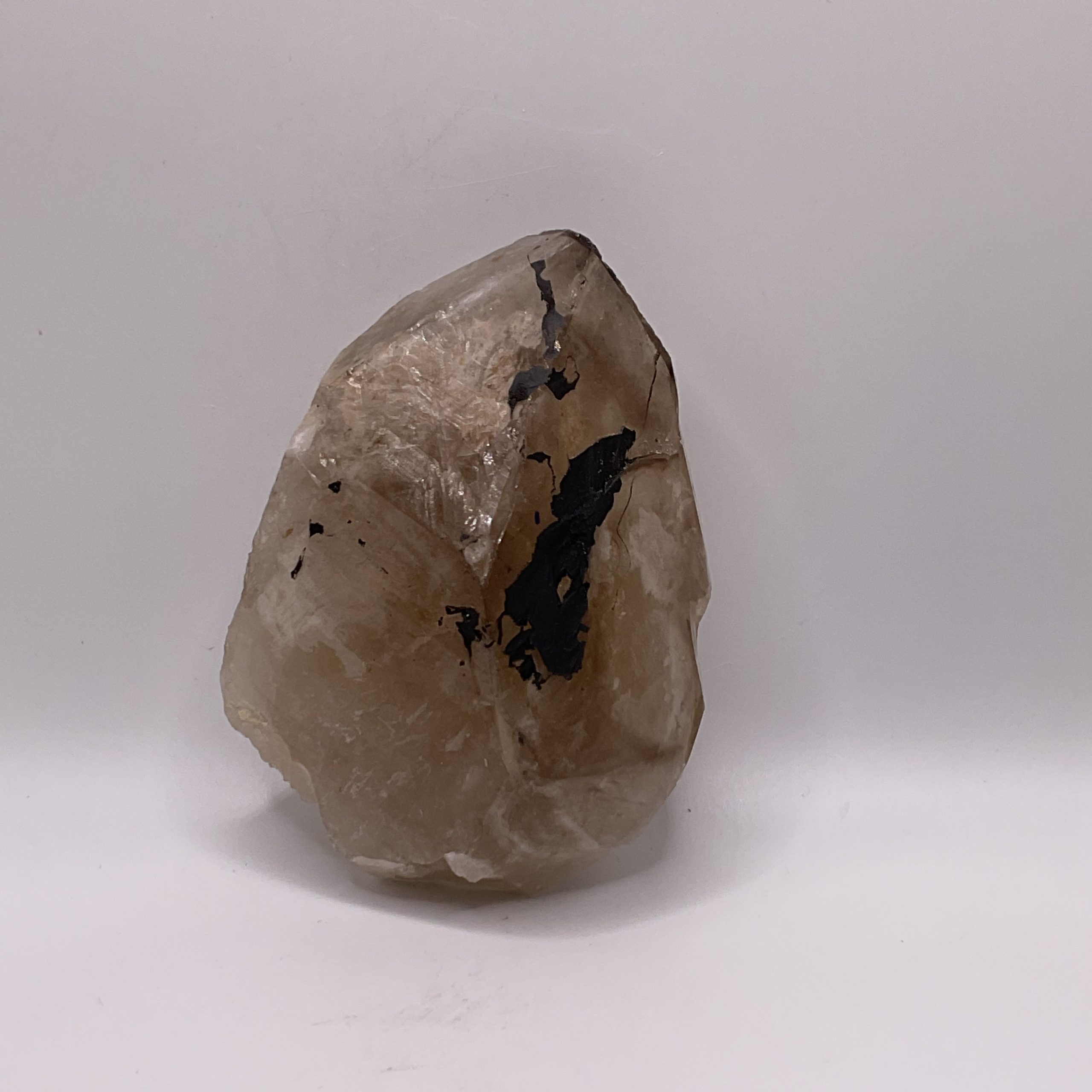
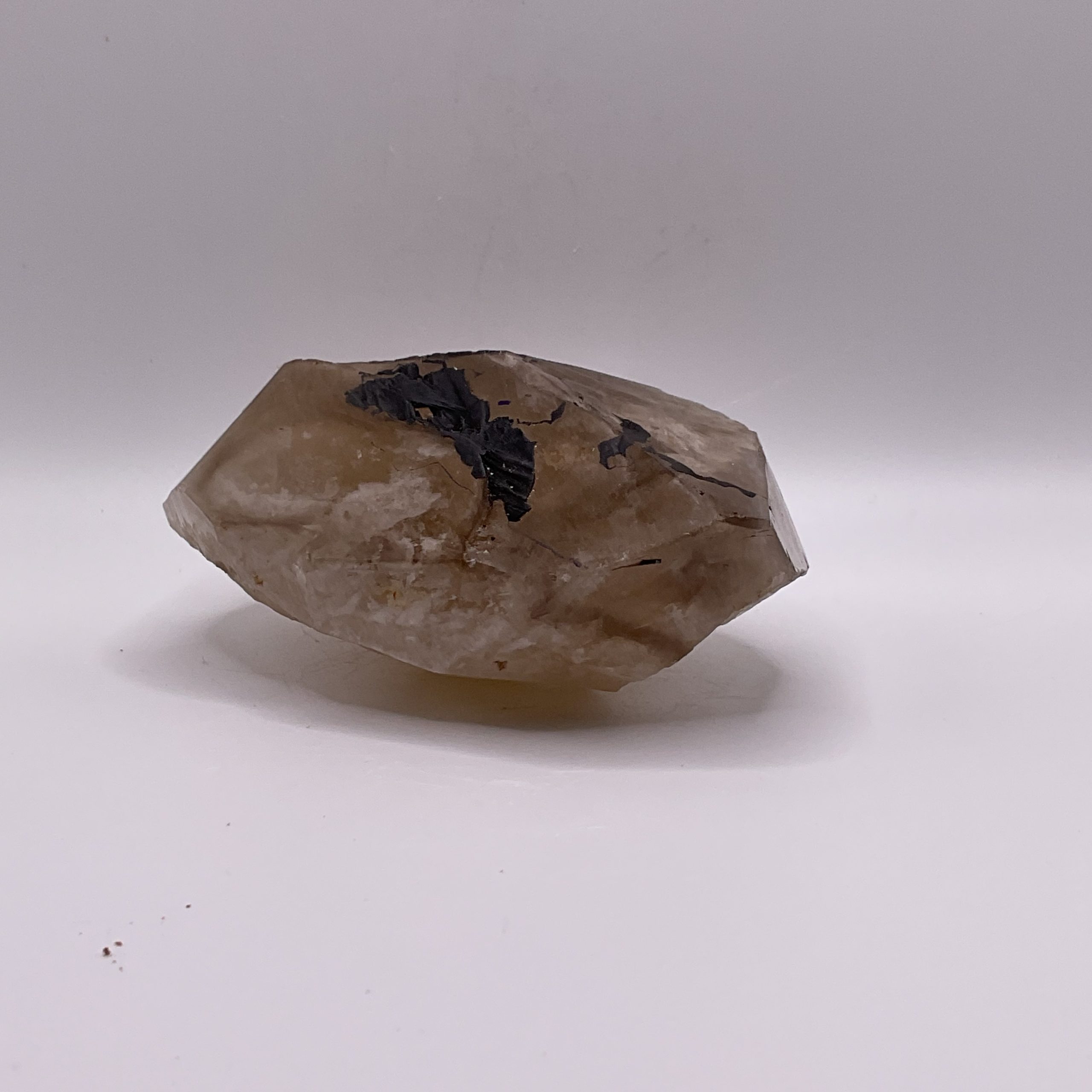
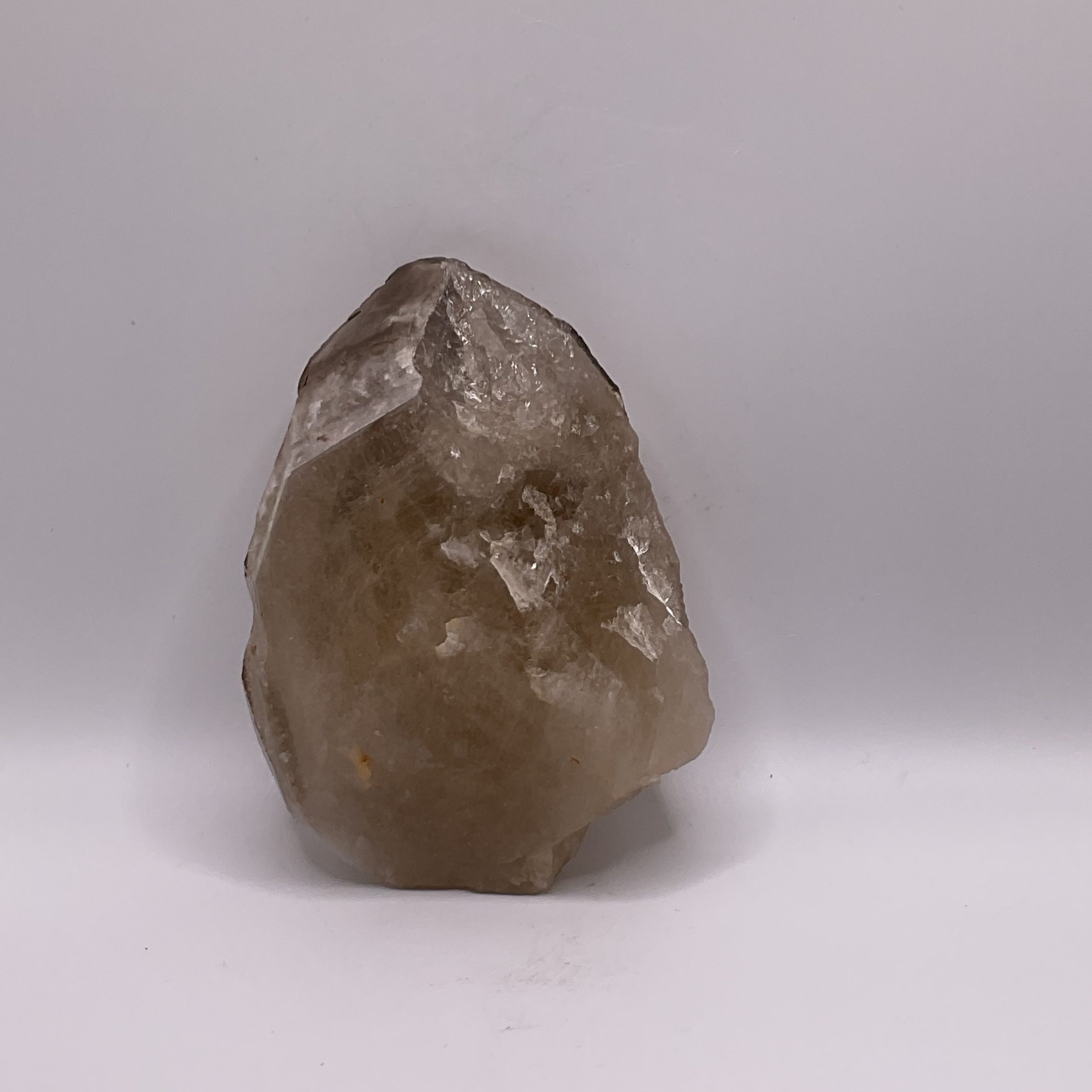
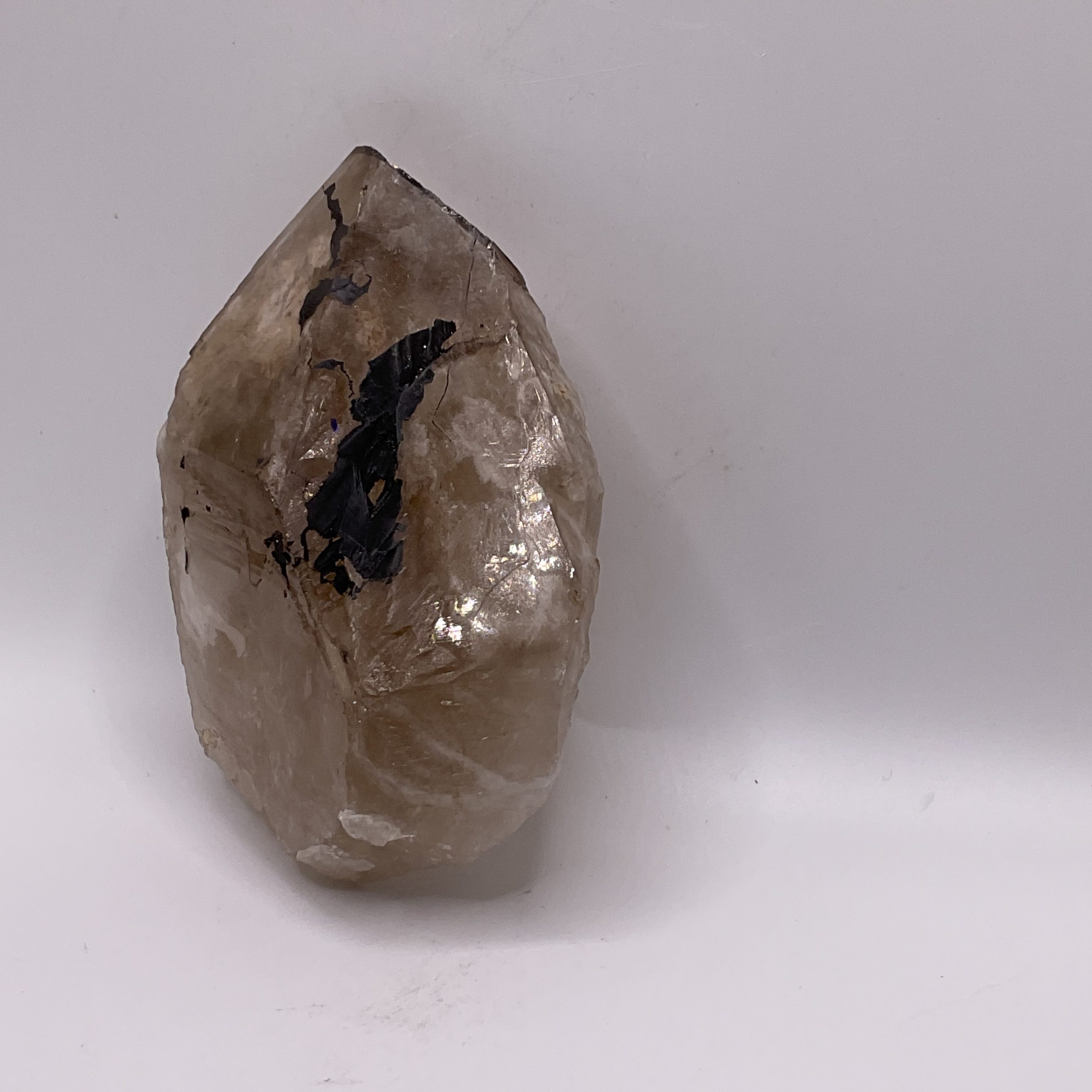
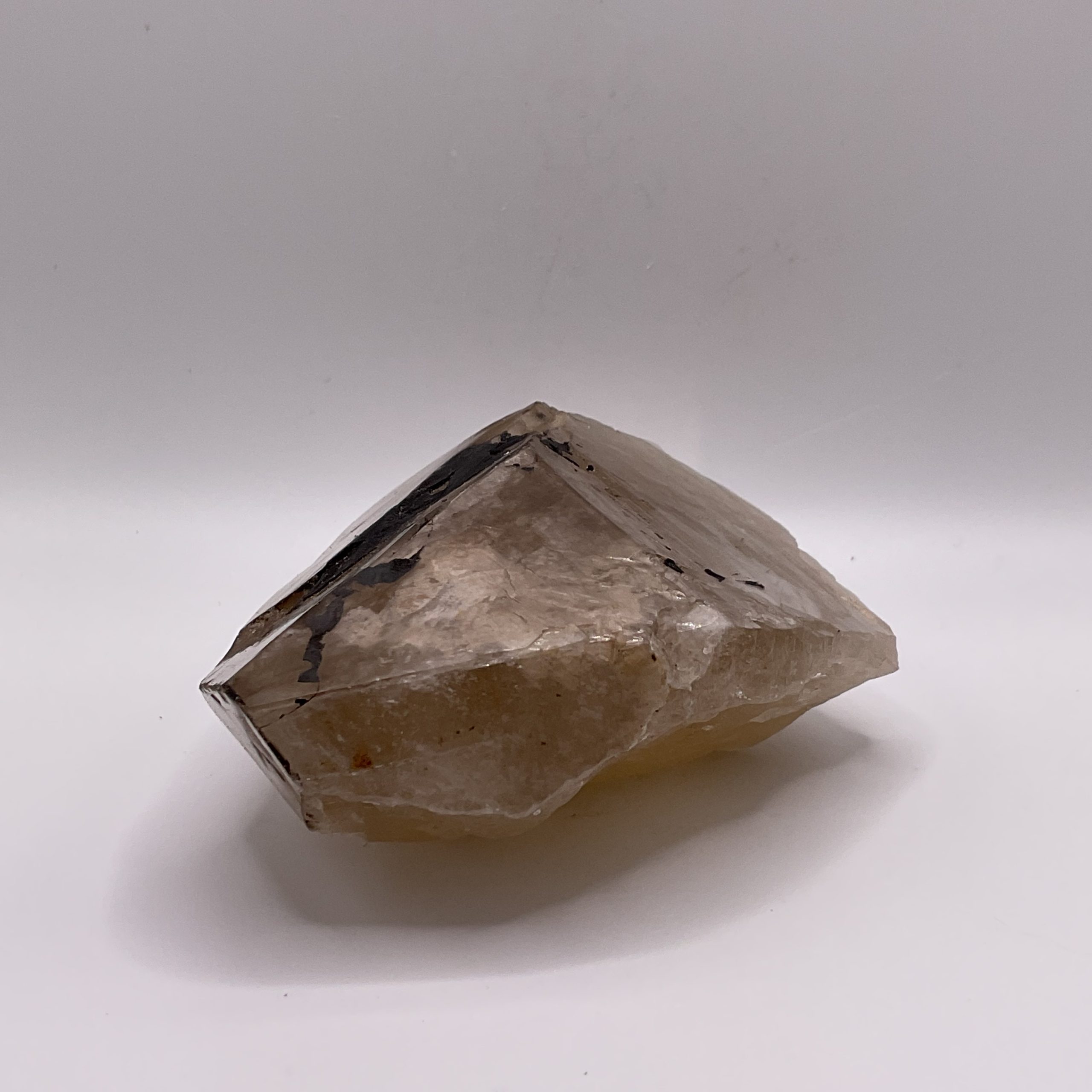
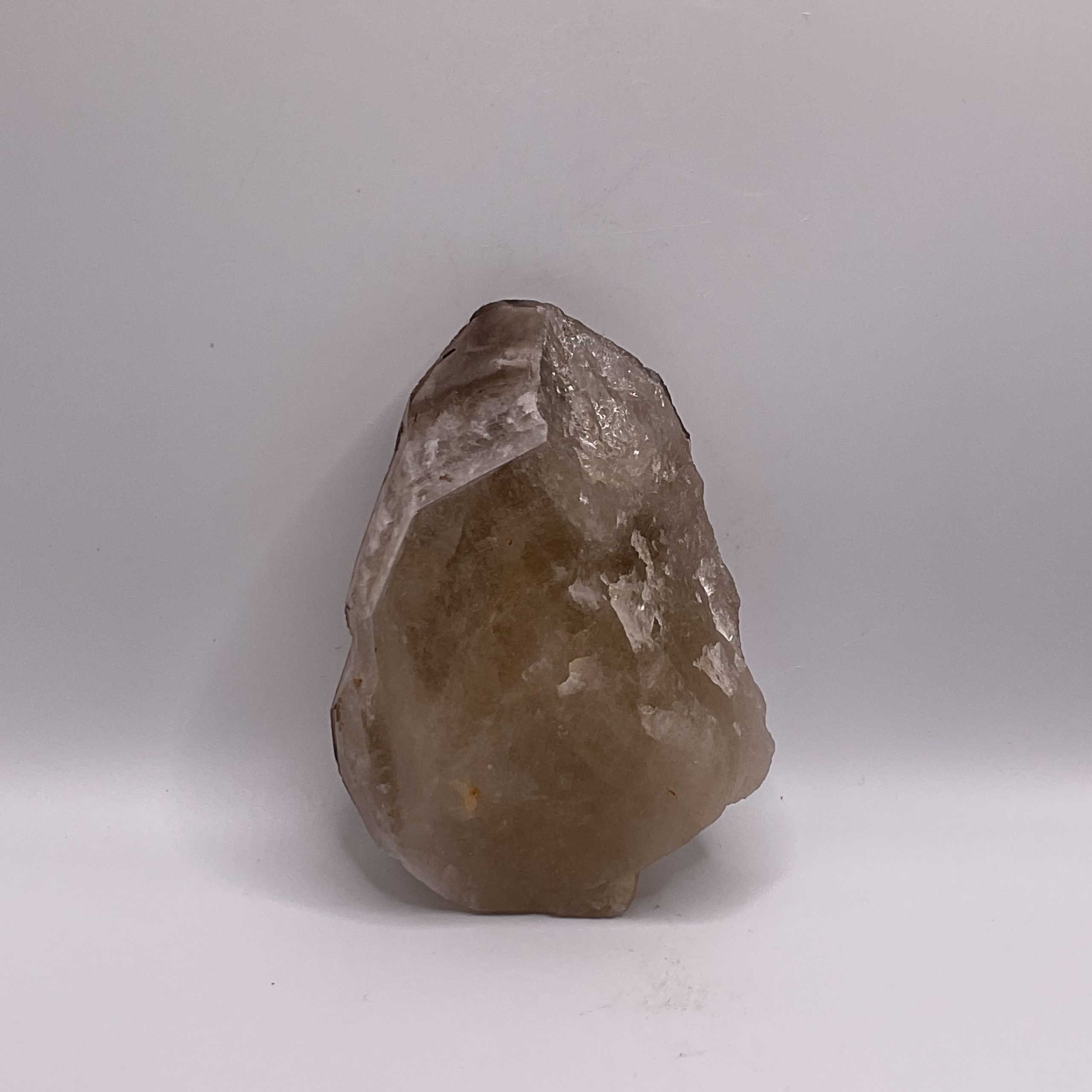
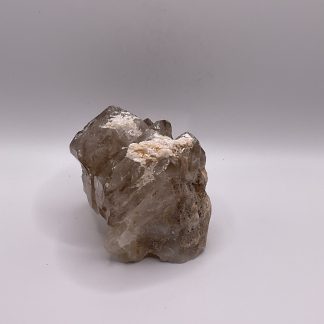
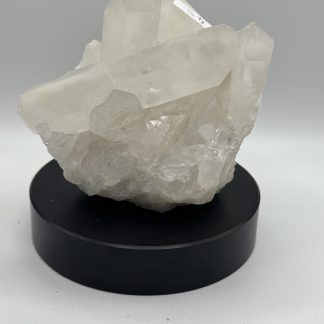
Smoky elestial quartz/black inclusion

£71.00

Smoky elestial quartz is a natural variety of silicon dioxide (SiO₂) characterized by smoky coloration and complex, skeletal crystal growth rather than smooth, euhedral points.

Chemical & Physical Properties

  • Mineral class: Silicate (tectosilicate)

  • Crystal system: Trigonal (hexagonal crystal family)

  • Hardness: 7 on the Mohs scale

  • Color: Light brown to dark brown, gray-brown, occasionally nearly black

  • Transparency: Transparent to translucent

  • Luster: Vitreous

The smoky coloration results from natural ionizing radiation acting on trace aluminum impurities within the quartz lattice. This radiation alters the electronic structure, producing color centers responsible for the smoky appearance. Heating can partially or fully remove this coloration, distinguishing natural smoky quartz from some treated specimens.


Elestial (Skeletal) Growth Structure

The term elestial is descriptive, not a formal mineral species. It refers to quartz crystals exhibiting:

  • Stepped, terraced, or etched surfaces

  • Layered or plate-like growth

  • Multiple terminations or partially formed faces

These features develop when crystal growth occurs under non-uniform conditions, such as:

  • Rapid changes in temperature or pressure

  • Fluctuating silica concentration in hydrothermal fluids

  • Interrupted growth followed by renewed crystallization

Instead of forming smooth faces, the crystal grows unevenly, preserving evidence of its growth history along the crystal surfaces.


Formation Environment

Smoky elestial quartz typically forms in hydrothermal environments, including:

  • Pegmatites

  • Alpine-type veins

  • Fractures in granitic or metamorphic host rock

Elestial growth is often associated with highly saturated silica fluids that cool or depressurize irregularly. The smoky coloration usually occurs after crystal formation, once the quartz has been exposed to natural radiation from surrounding rocks containing radioactive elements such as uranium or thorium.


Common Localities

Notable sources include:

  • Brazil (Minas Gerais)

  • Madagascar

  • Himalayan regions (Nepal, India, Tibet)

  • United States (Colorado, Arkansas, California)

Crystals from different regions may show distinct habits, color intensity, and degrees of skeletal development.


Geological Significance

Elestial quartz crystals are of interest to collectors and geologists because they:

  • Preserve visible records of changing growth conditions

  • Illustrate non-equilibrium crystal formation

  • Provide insight into hydrothermal fluid dynamics

Their complex morphology contrasts with textbook quartz points, making them valuable examples of environmentally influenced crystal growth.


Summary

From a geological perspective, smoky elestial quartz is a natural quartz crystal whose:

  • Color results from radiation-induced lattice defects

  • Structure reflects interrupted and variable growth conditions

  • Morphology records a dynamic geological environment

It is best understood as a growth habit and coloration combination, not a separate mineral species.
Description

Smoky elestial quartz is a natural variety of silicon dioxide (SiO₂) characterized by smoky coloration and complex, skeletal crystal growth rather than smooth, euhedral points.

Chemical & Physical Properties

  • Mineral class: Silicate (tectosilicate)

  • Crystal system: Trigonal (hexagonal crystal family)

  • Hardness: 7 on the Mohs scale

  • Color: Light brown to dark brown, gray-brown, occasionally nearly black

  • Transparency: Transparent to translucent

  • Luster: Vitreous

The smoky coloration results from natural ionizing radiation acting on trace aluminum impurities within the quartz lattice. This radiation alters the electronic structure, producing color centers responsible for the smoky appearance. Heating can partially or fully remove this coloration, distinguishing natural smoky quartz from some treated specimens.


Elestial (Skeletal) Growth Structure

The term elestial is descriptive, not a formal mineral species. It refers to quartz crystals exhibiting:

  • Stepped, terraced, or etched surfaces

  • Layered or plate-like growth

  • Multiple terminations or partially formed faces

These features develop when crystal growth occurs under non-uniform conditions, such as:

  • Rapid changes in temperature or pressure

  • Fluctuating silica concentration in hydrothermal fluids

  • Interrupted growth followed by renewed crystallization

Instead of forming smooth faces, the crystal grows unevenly, preserving evidence of its growth history along the crystal surfaces.


Formation Environment

Smoky elestial quartz typically forms in hydrothermal environments, including:

  • Pegmatites

  • Alpine-type veins

  • Fractures in granitic or metamorphic host rock

Elestial growth is often associated with highly saturated silica fluids that cool or depressurize irregularly. The smoky coloration usually occurs after crystal formation, once the quartz has been exposed to natural radiation from surrounding rocks containing radioactive elements such as uranium or thorium.


Common Localities

Notable sources include:

  • Brazil (Minas Gerais)

  • Madagascar

  • Himalayan regions (Nepal, India, Tibet)

  • United States (Colorado, Arkansas, California)

Crystals from different regions may show distinct habits, color intensity, and degrees of skeletal development.


Geological Significance

Elestial quartz crystals are of interest to collectors and geologists because they:

  • Preserve visible records of changing growth conditions

  • Illustrate non-equilibrium crystal formation

  • Provide insight into hydrothermal fluid dynamics

Their complex morphology contrasts with textbook quartz points, making them valuable examples of environmentally influenced crystal growth.


Summary

From a geological perspective, smoky elestial quartz is a natural quartz crystal whose:

  • Color results from radiation-induced lattice defects

  • Structure reflects interrupted and variable growth conditions

  • Morphology records a dynamic geological environment

It is best understood as a growth habit and coloration combination, not a separate mineral species.
Reviews

There are no reviews yet.

Be the first to review “Smoky elestial quartz/black inclusion”

Your email address will not be published. Required fields are marked *