
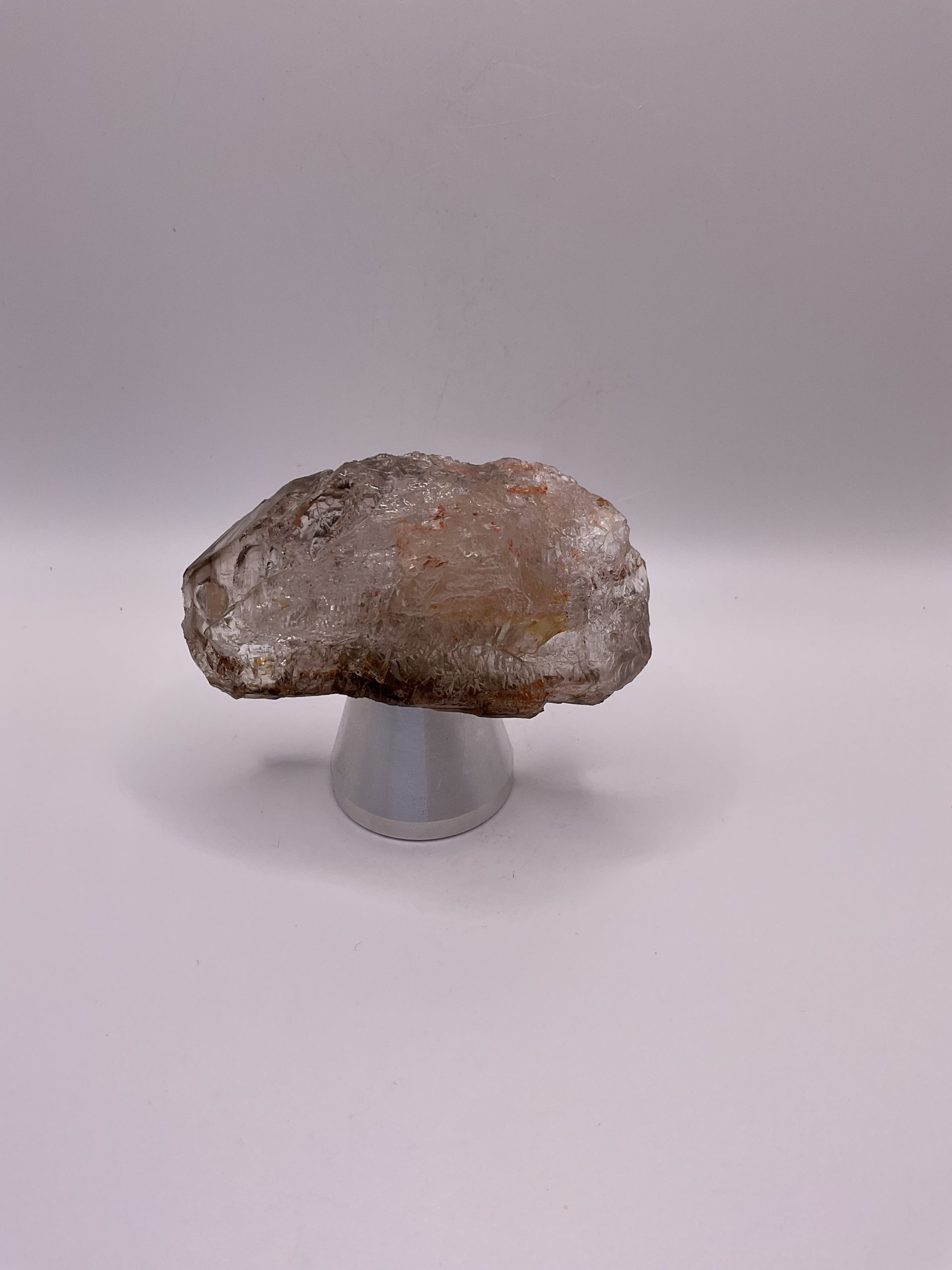
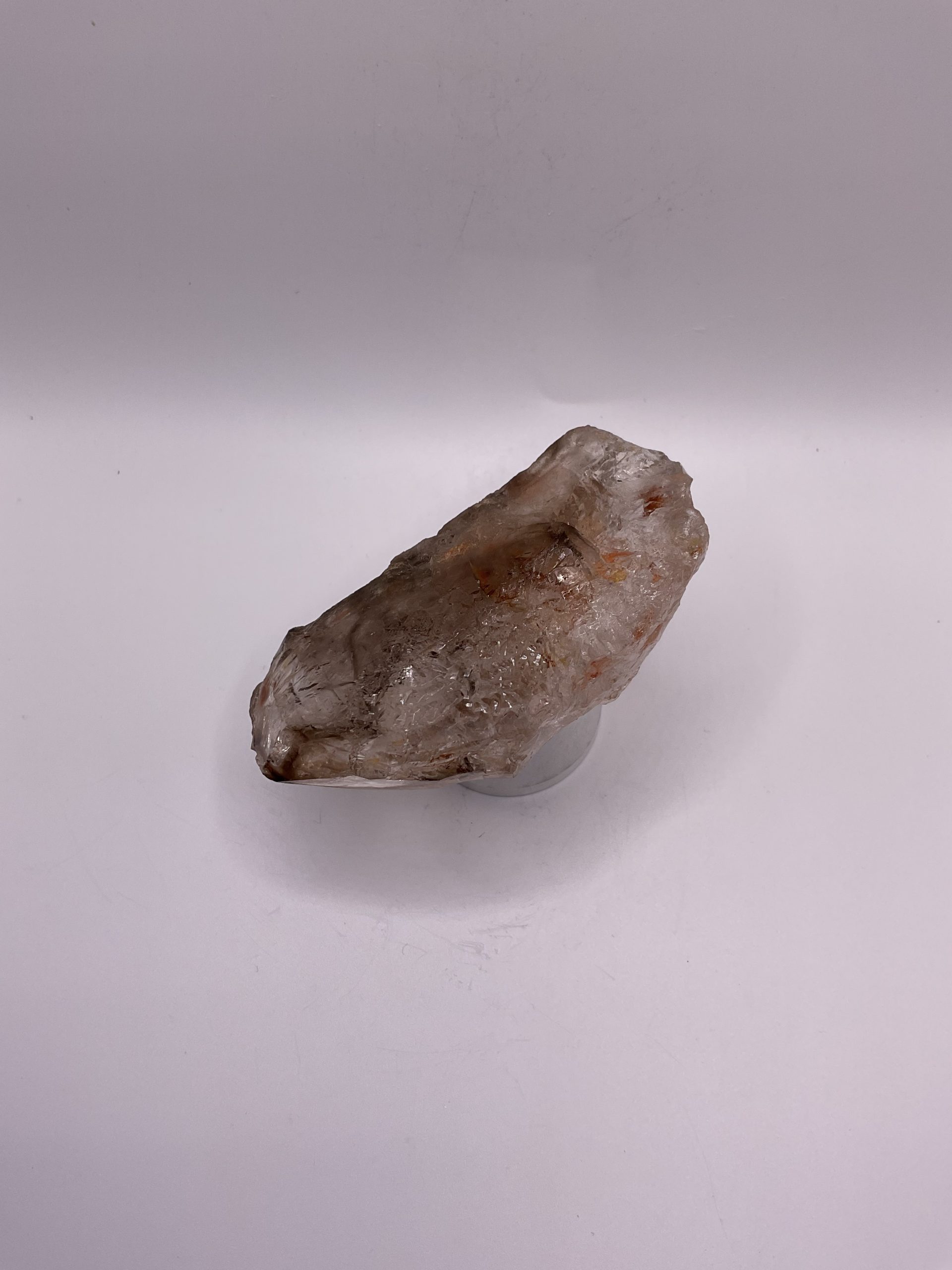
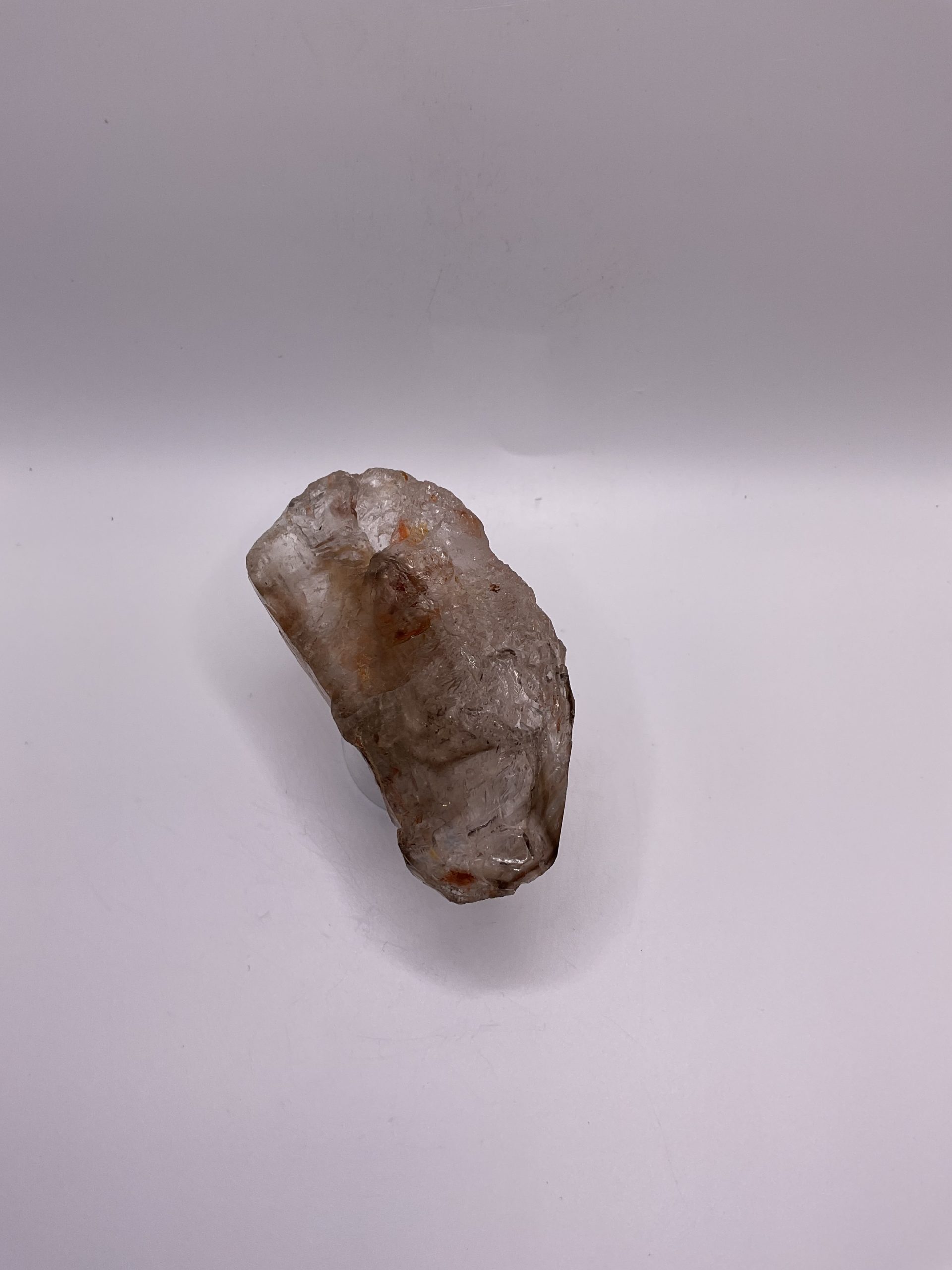
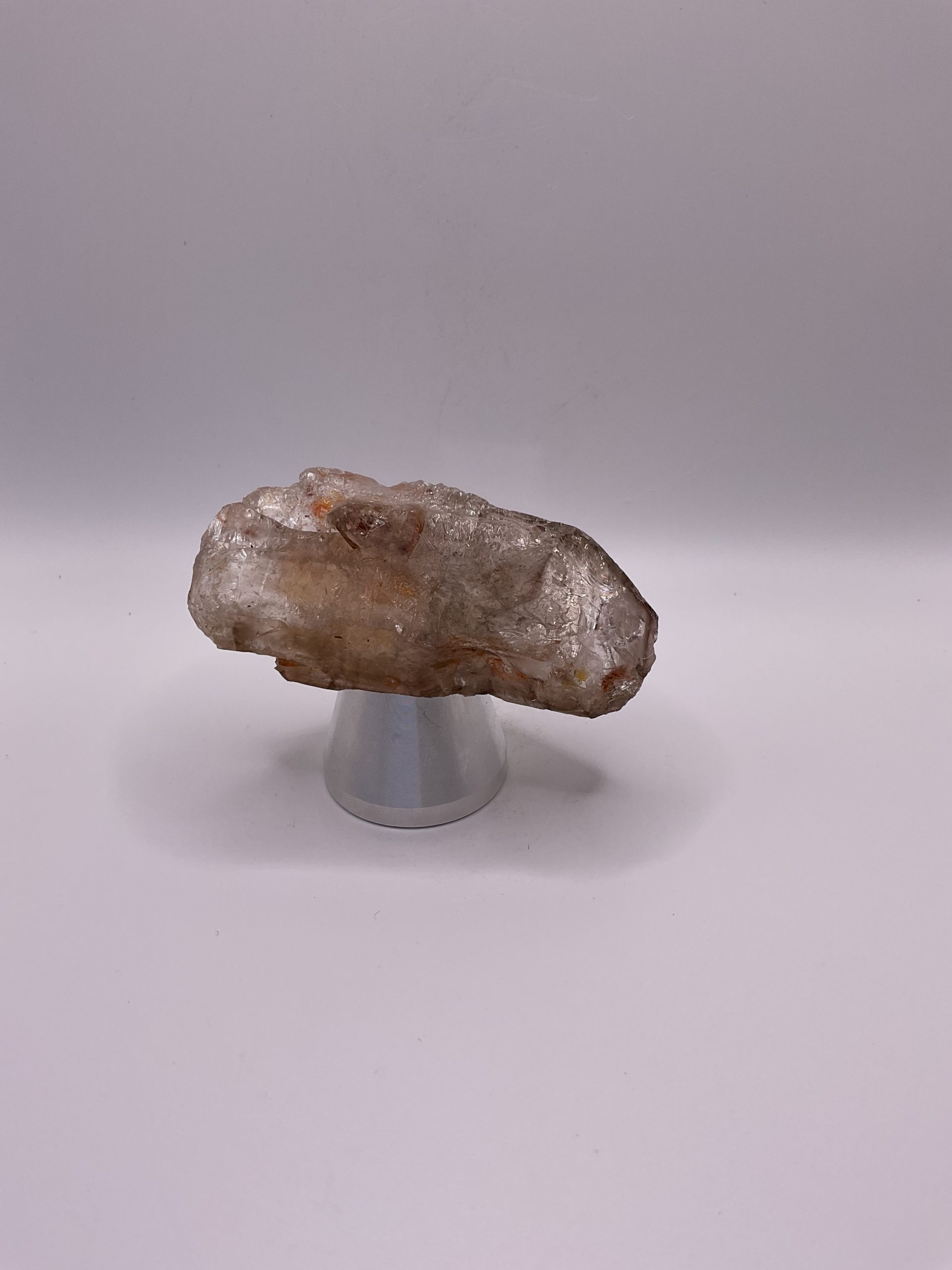
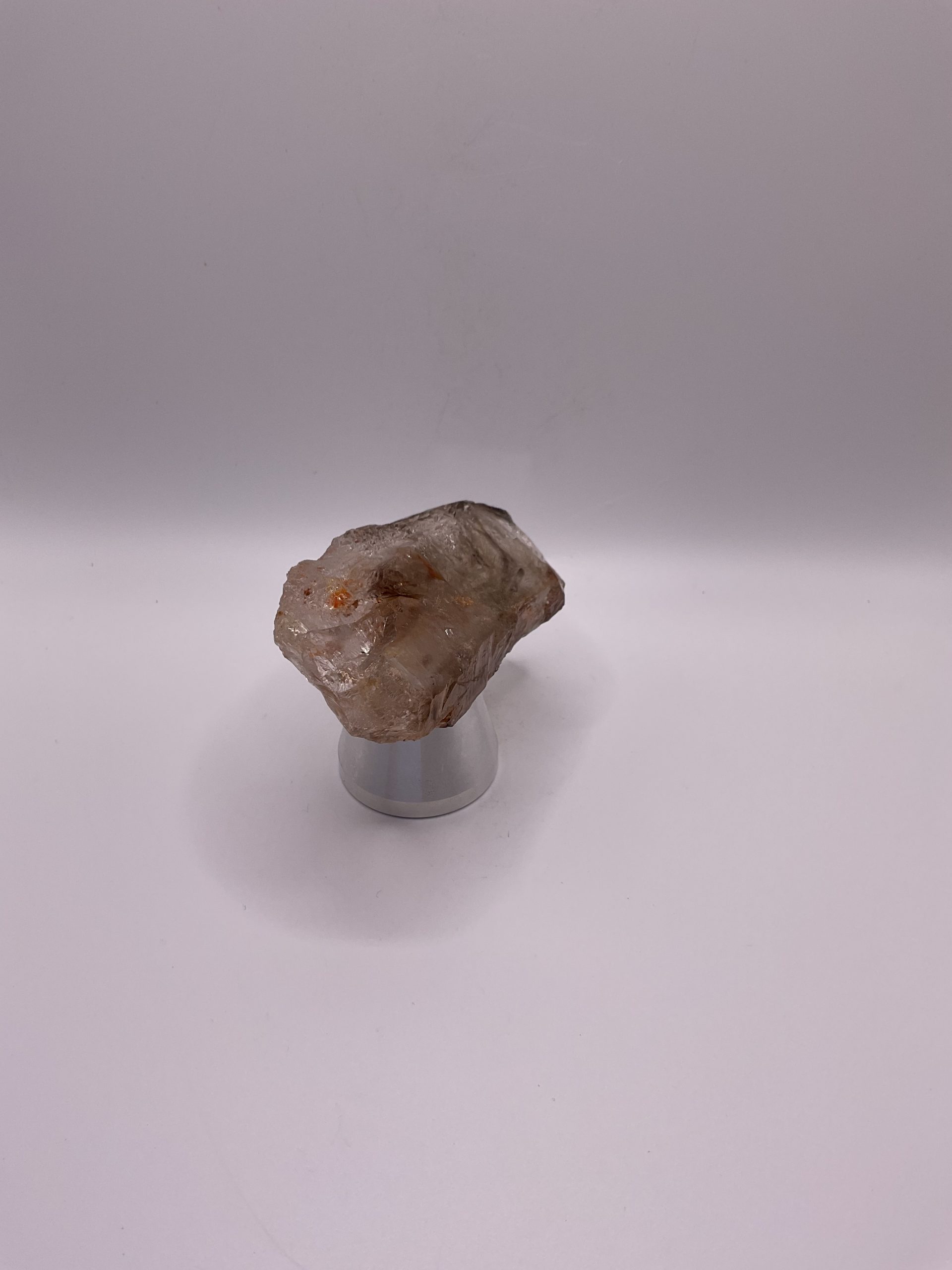
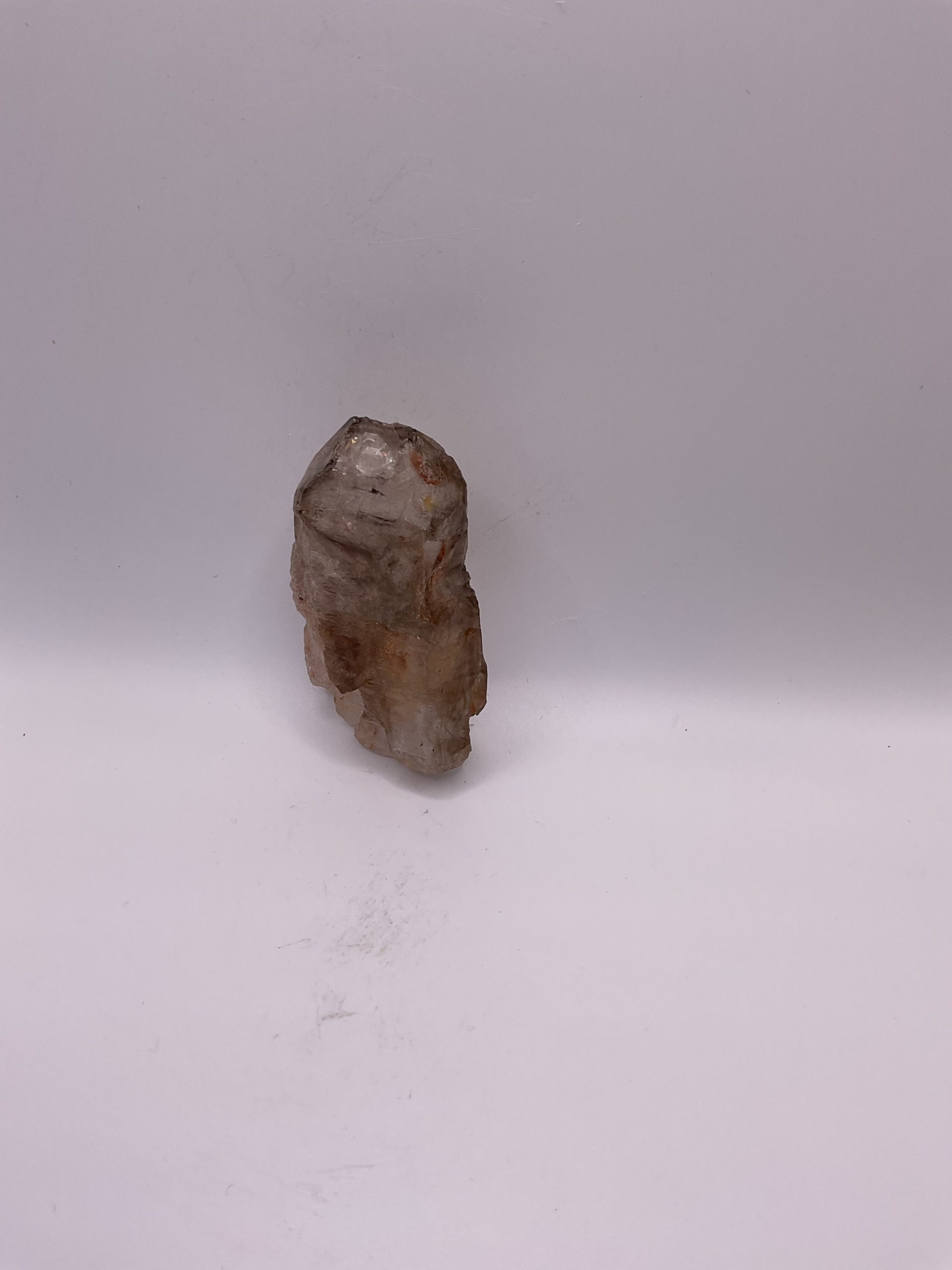
Description
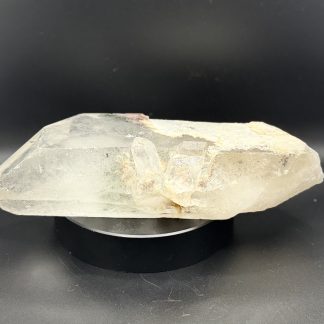
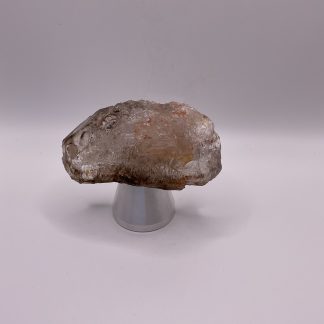
What is Smoky Elestial Quartz? (Scientific)
1. Mineral Classification
-
Mineral: Quartz
-
Chemical formula: SiO₂ (silicon dioxide)
-
Crystal system: Trigonal (hexagonal crystal family)
-
Hardness: 7 on the Mohs scale
“Smoky elestial quartz” is not a separate mineral species. It’s quartz with:
-
Smoky coloration, and
-
Elestial (skeletal) crystal growth morphology
2. Why It’s Smoky (Color Origin)
The smoky color forms due to natural ionizing radiation acting on quartz that contains trace aluminum impurities:
-
Aluminum substitutes for silicon in the crystal lattice
-
Natural radiation (from surrounding rocks) displaces electrons
-
This creates color centers that absorb light → brown to gray coloration
✔️ The color is natural, not a coating
✔️ Heating above ~200–300°C can fade or remove the smoky color
3. What “Elestial” Means (Crystal Growth)
Elestial quartz refers to an irregular, skeletal growth habit, not a chemical difference.
Key characteristics:
-
Layered, terraced, or step-like crystal faces
-
Etched or skeletal terminations
-
Multiple growth phases recorded on one crystal
This happens when:
-
Growth conditions change rapidly
-
Supersaturation fluctuates
-
Temperature, pressure, or chemistry shifts during crystallization
Instead of smooth faces, the crystal grows in pulses, leaving “growth scars.”
4. Formation Environment
Smoky elestial quartz typically forms in:
-
Hydrothermal veins
-
Pegmatites
-
Metamorphic environments
Common conditions:
-
Silica-rich fluids
-
Variable temperature and pressure
-
Long growth periods with interruptions
Radiation exposure usually occurs after crystal growth, over geologic time.
Reviews
There are no reviews yet.