
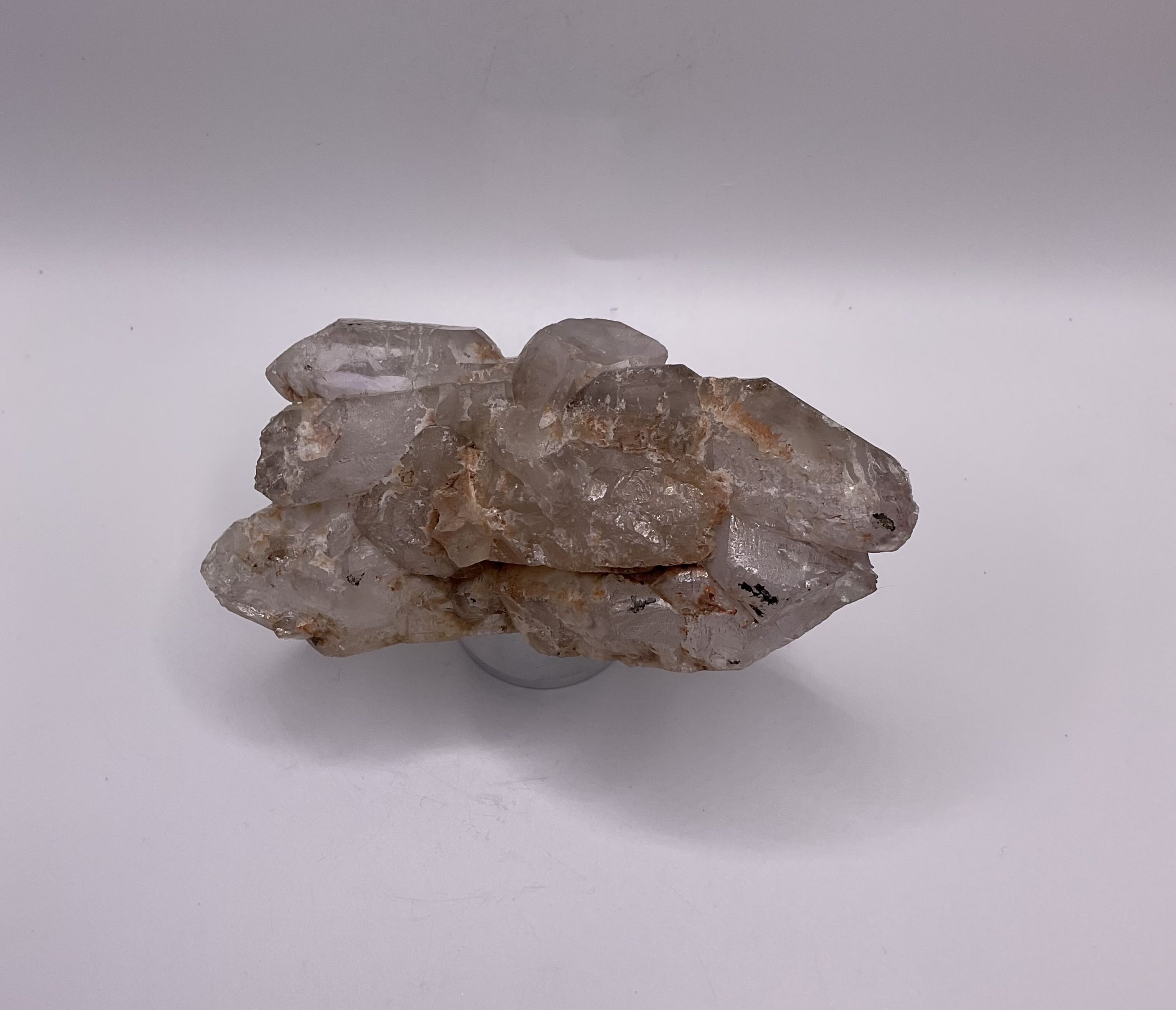
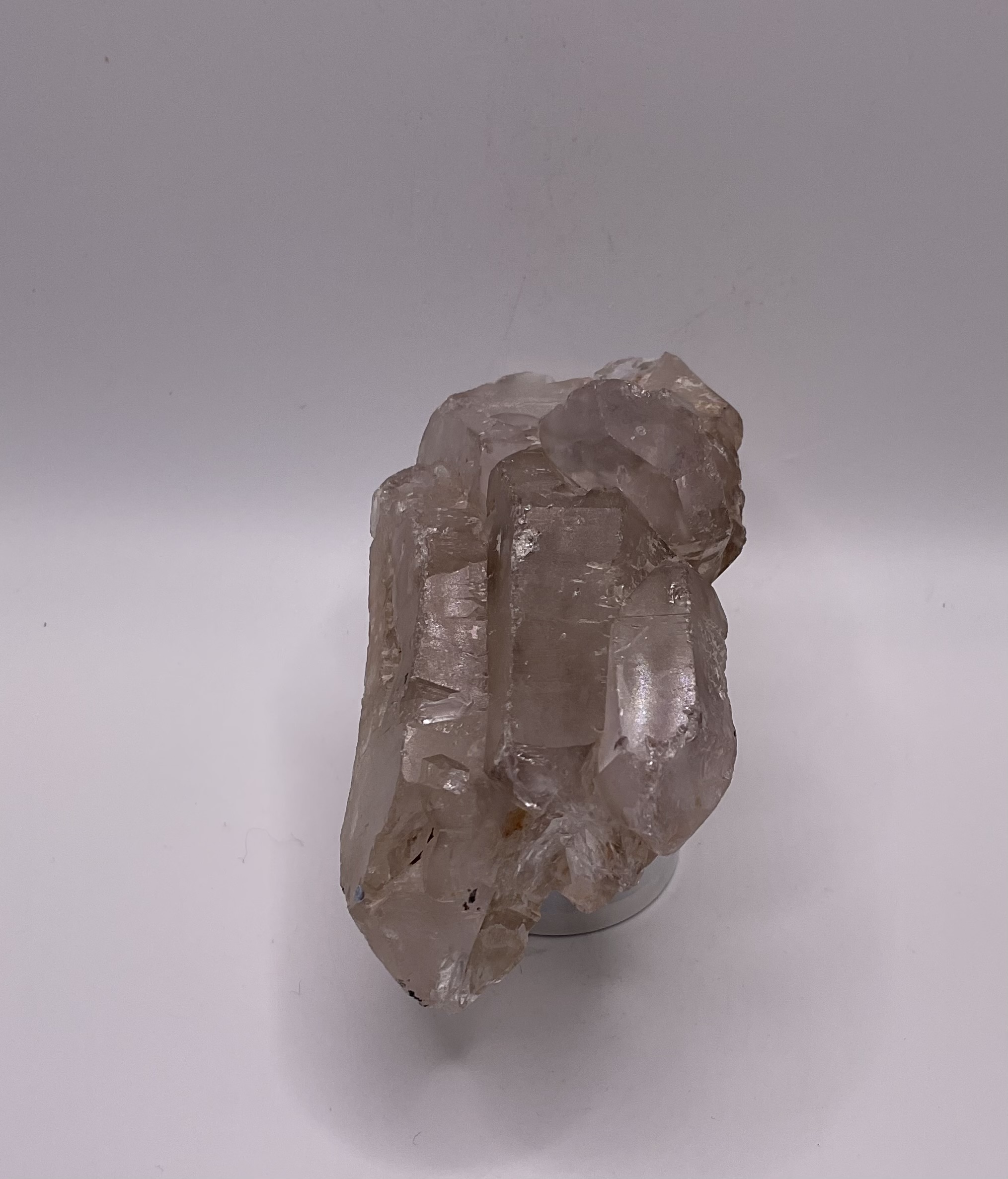
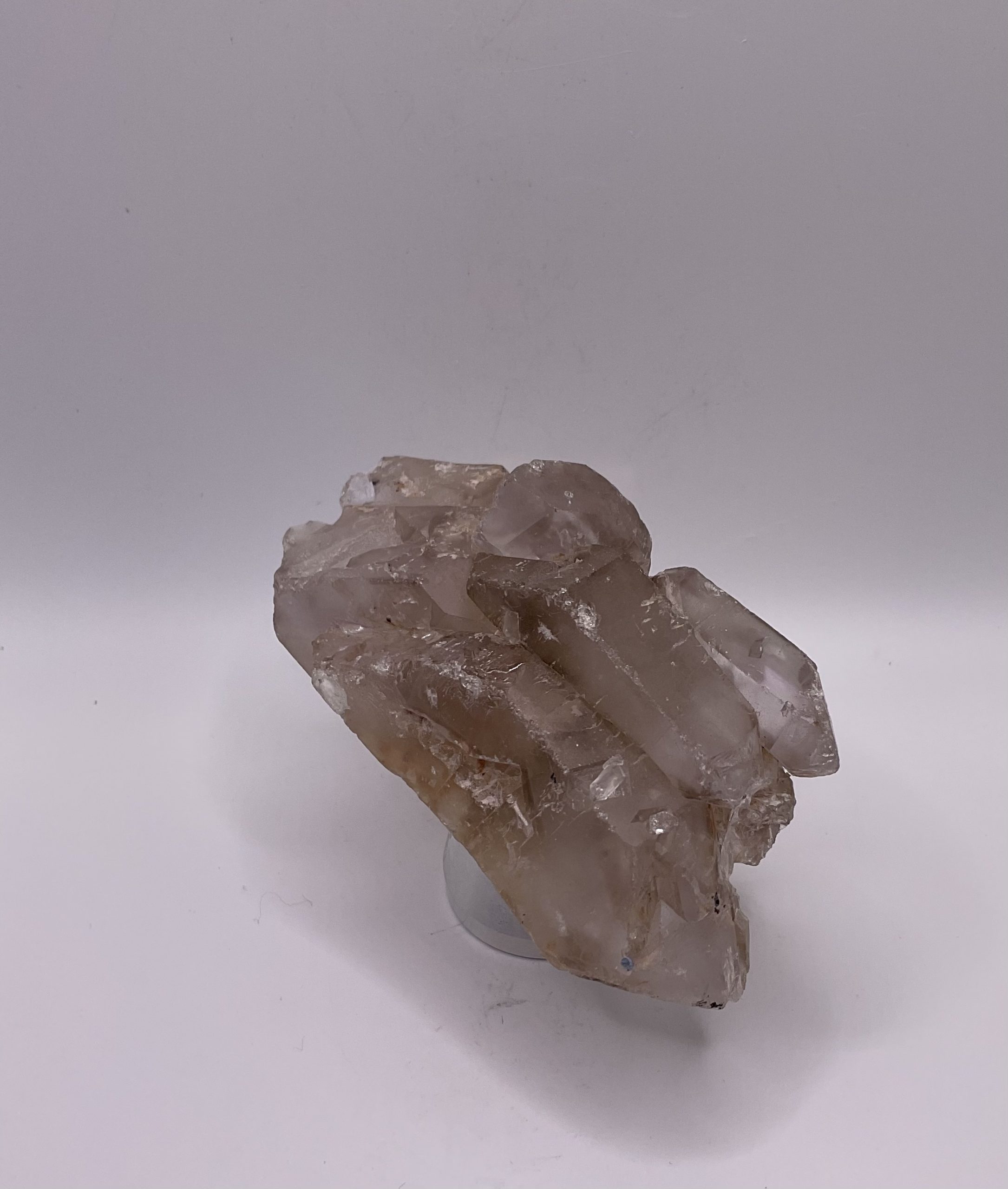
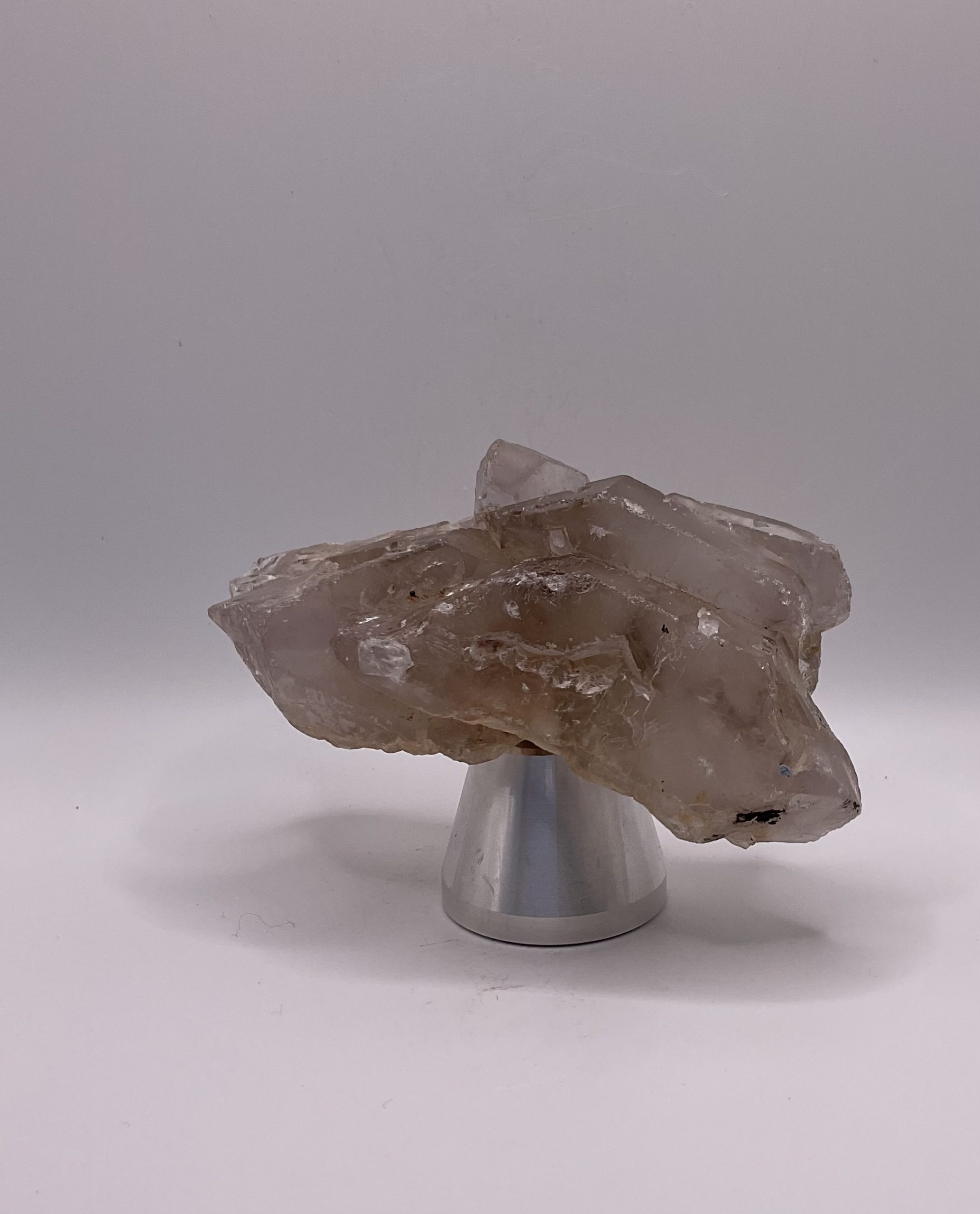
Description
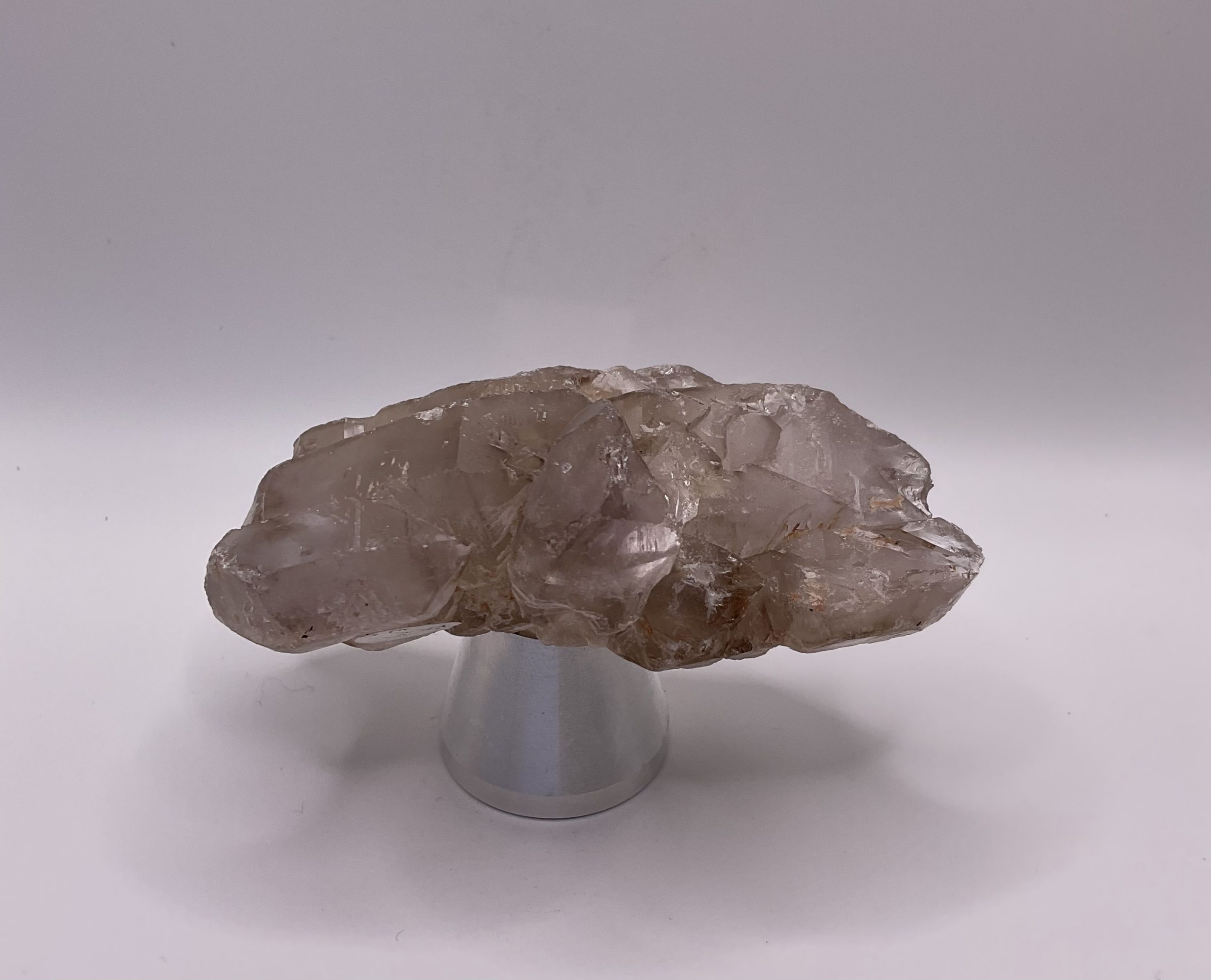
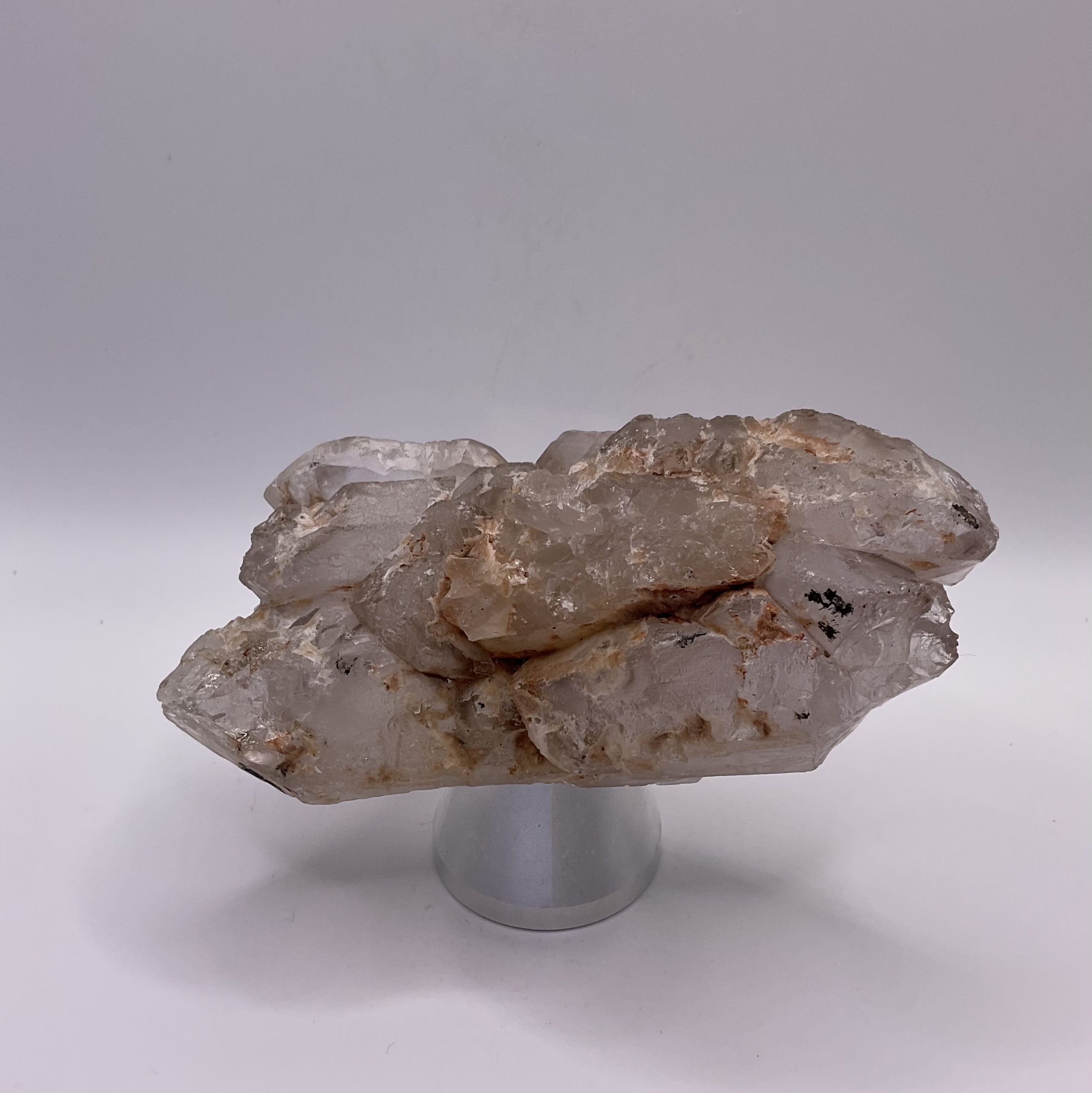
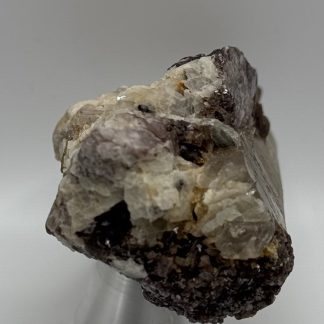
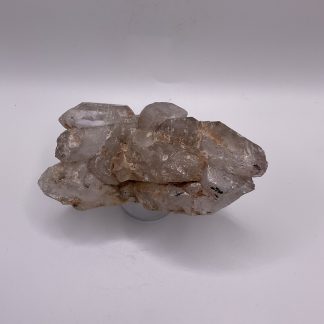
Smoky quartz
-
It’s a variety of quartz (SiO₂).
-
The smoky color comes from natural radiation acting on trace aluminum in the crystal lattice.
-
The radiation usually comes from nearby radioactive minerals in granites or pegmatites.
-
Color intensity depends on radiation dose and aluminum content.
Elestial (a.k.a. skeletal or cathedral quartz)
-
“Elestial” isn’t a formal mineral species term—it describes a growth habit.
-
Forms under rapid, fluctuating growth conditions, often when:
-
Temperature or pressure changes quickly
-
Silica-rich fluids pulse in and out
-
Space for crystal growth is limited
-
-
Results in:
-
Stepped, etched, layered crystal faces
-
Multiple terminations
-
Complex, almost “architectural” surfaces
-
Geological environment
Smoky elestial quartz typically forms in:
-
Granitic pegmatites
-
Hydrothermal veins
-
Late-stage magmatic systems where:
-
Fluids are silica-rich
-
Volatiles (H₂O, F, B) are abundant
-
Crystals grow fast, stop, dissolve slightly, then regrow
-
Why smoky + elestial together?
-
Pegmatites provide:
-
Aluminum for smokiness
-
Radiation sources
-
Rapid, unstable growth conditions → elestial structure
-
-
So the two features often co-occur in places like:
-
Brazil
-
Madagascar
-
Colorado (USA)
-
Switzerland (Alpine veins)
-
Reviews
There are no reviews yet.