
Description
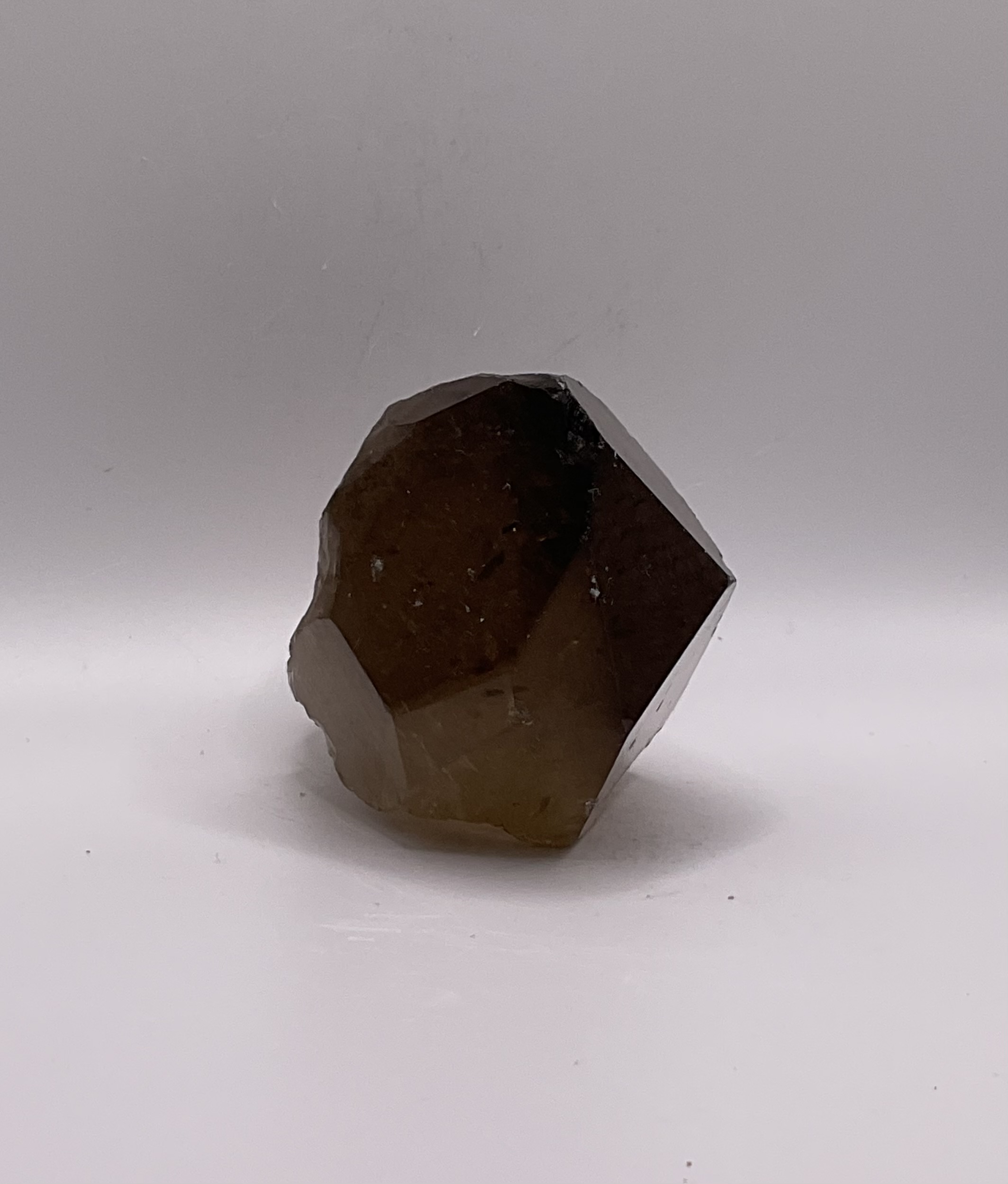
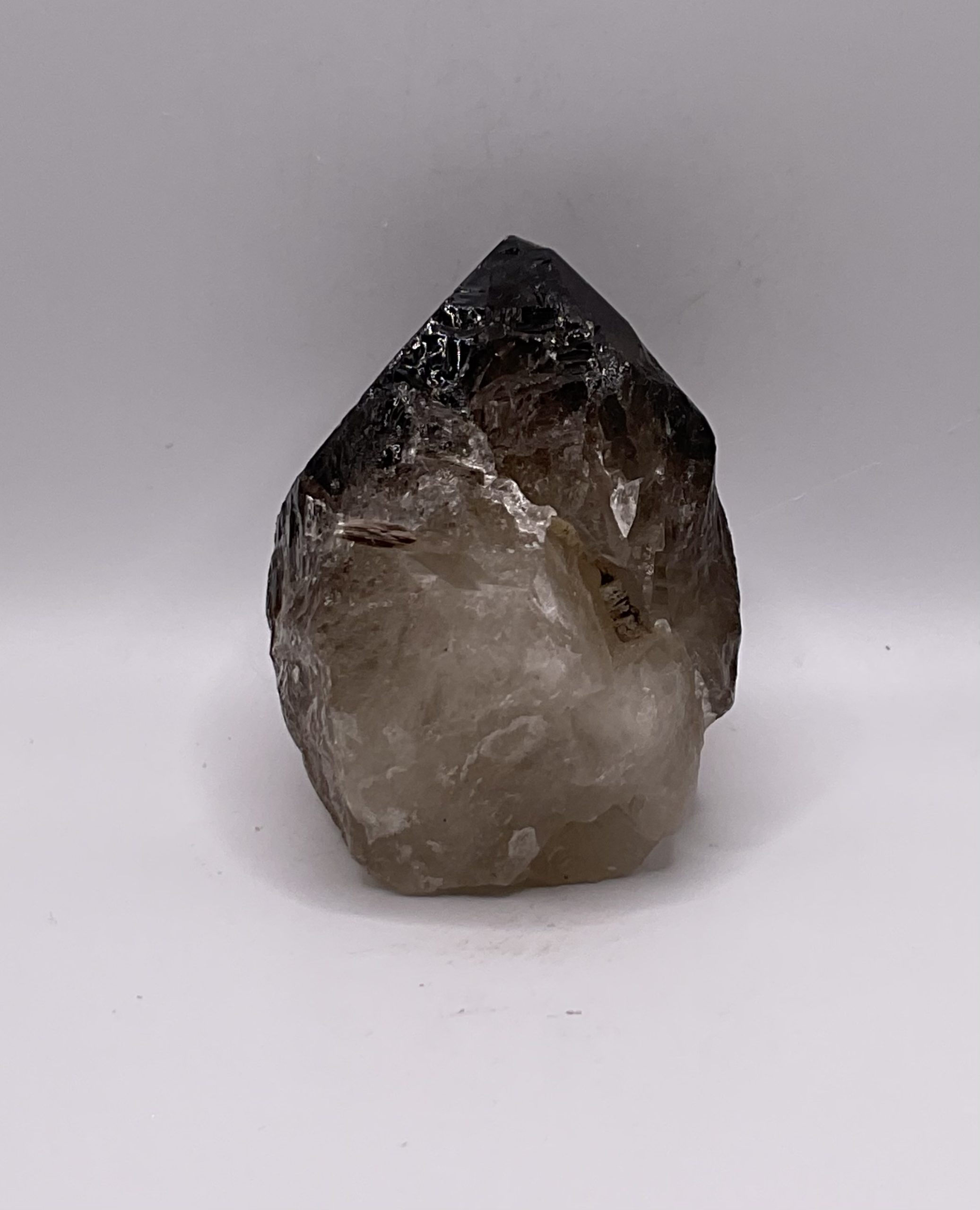
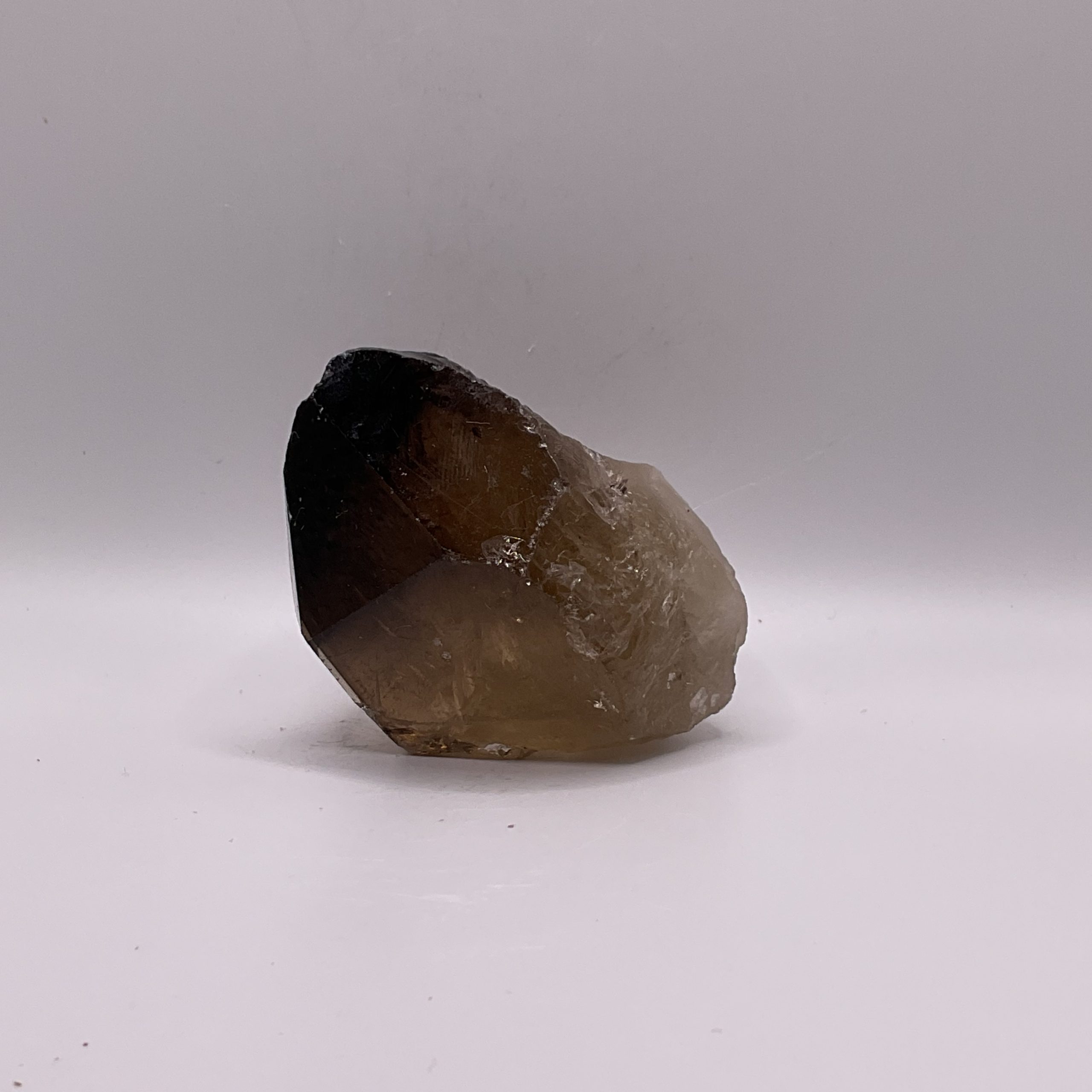
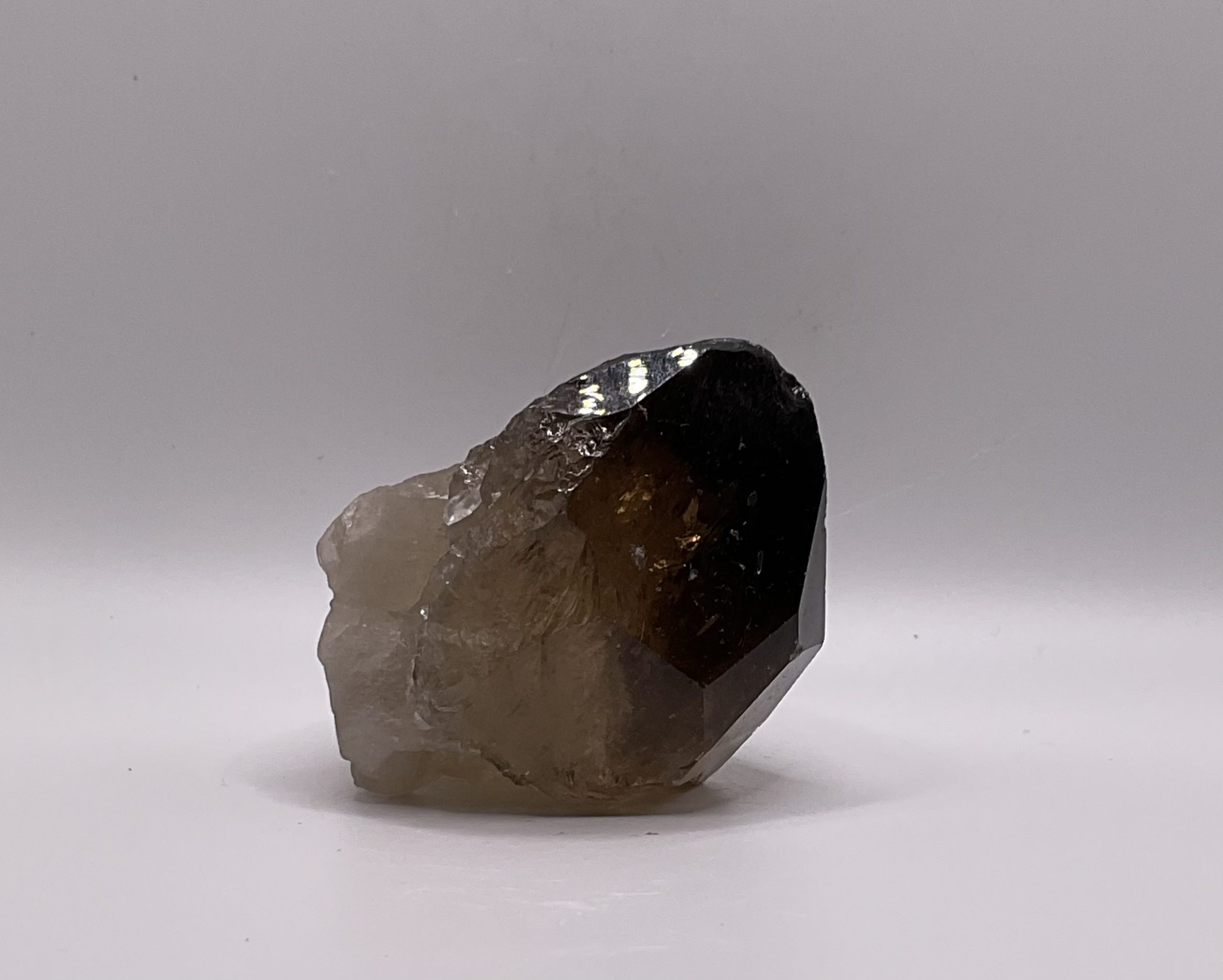
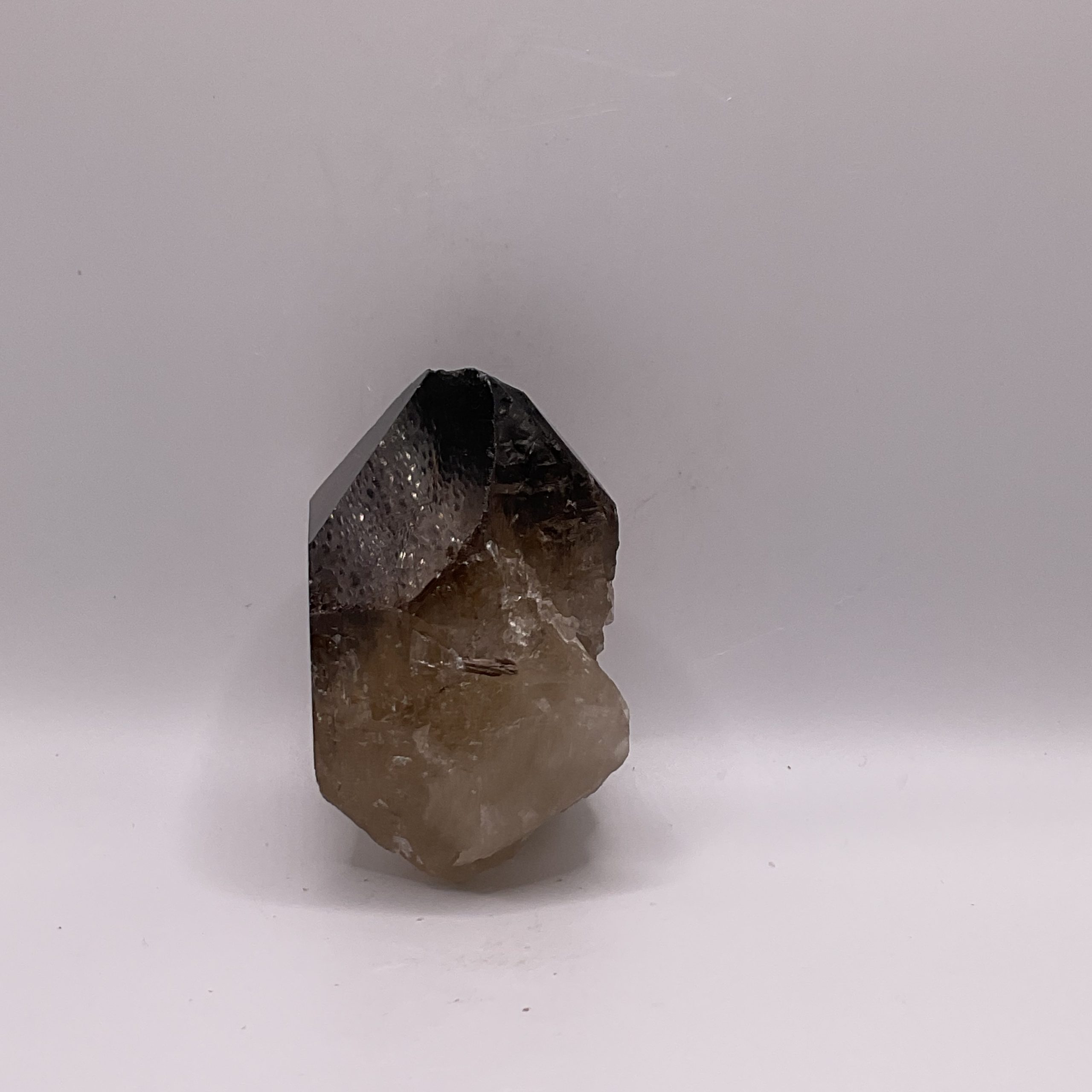
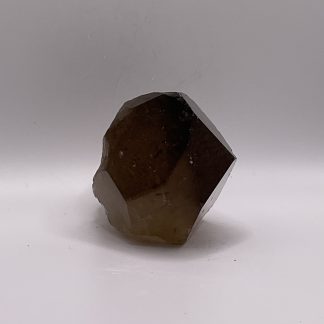
This specimen is a naturally occurring smoky quartz crystal, a variety of α-quartz (SiO₂) crystallized in the trigonal crystal system. The crystal exhibits a prismatic habit with a single termination, consistent with quartz growth in hydrothermal vein or pegmatitic environments.
The smoky coloration is caused by radiation-induced color centers formed when natural ionizing radiation interacts with trace aluminum (Al³⁺) substituting for silicon (Si⁴⁺) within the quartz lattice. Electron displacement associated with this substitution results in light absorption in the visible spectrum, producing gray to brown hues. The color is thermally unstable and may be reduced or eliminated by heating.
Crystal growth occurred from silica-rich aqueous fluids under variable temperature and pressure conditions. Internal growth features such as veils, zoning, or minor inclusions reflect episodic changes in crystallization conditions during formation.
Brazil, particularly the Minas Gerais geological province, is a globally significant source of smoky quartz due to its extensive granitic and pegmatitic systems, which provide favorable conditions for quartz crystallization and prolonged post-growth radiation exposure.
Mineralogical properties:
-
Chemical formula: SiO₂
-
Crystal system: Trigonal
-
Hardness: 7 (Mohs)
-
Fracture: Conchoidal
-
Luster: Vitreous
-
Transparency: Transparent to translucent
This specimen represents a stable, naturally irradiated quartz crystal formed over geologic timescales.
Reviews
There are no reviews yet.