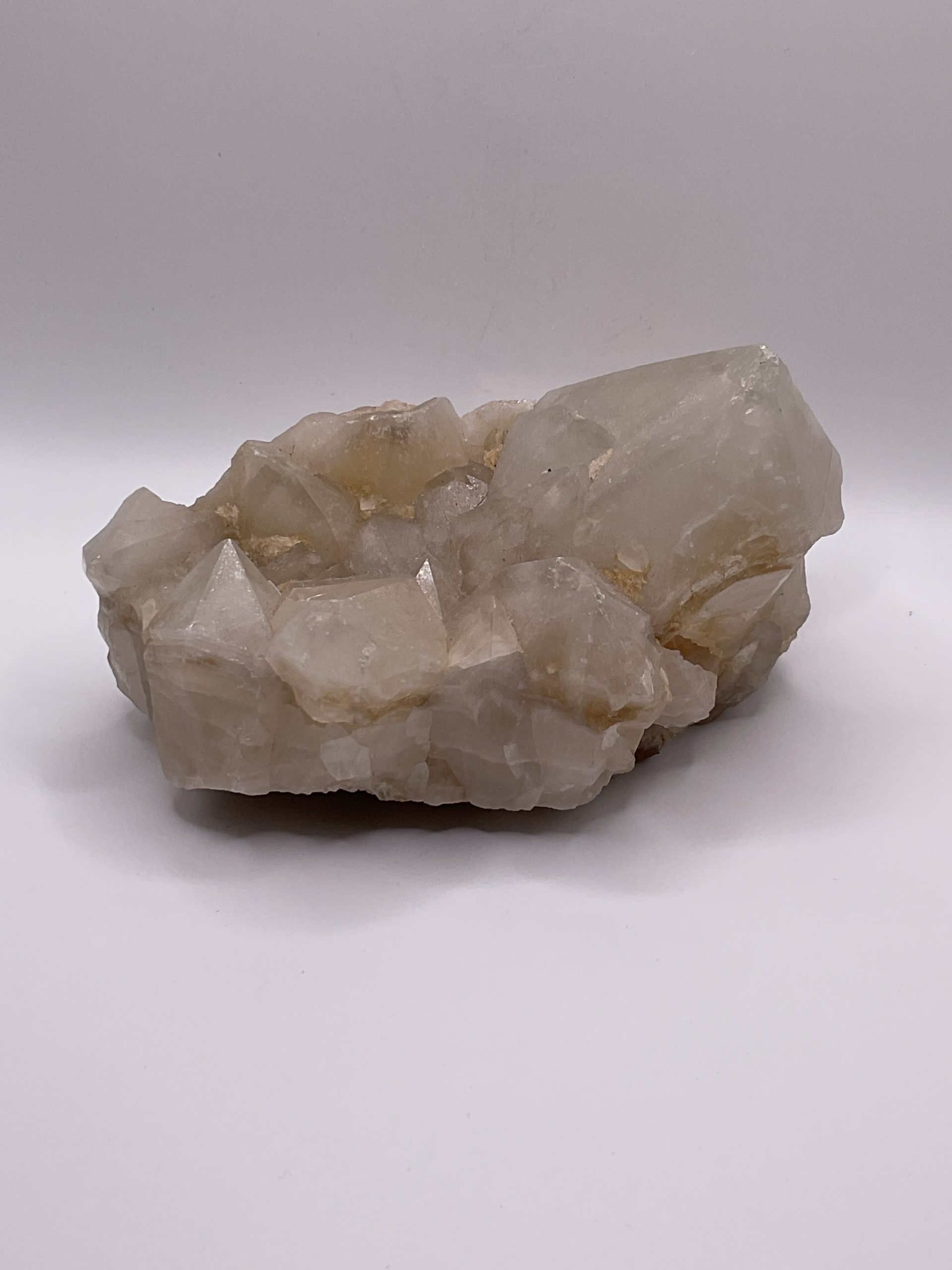
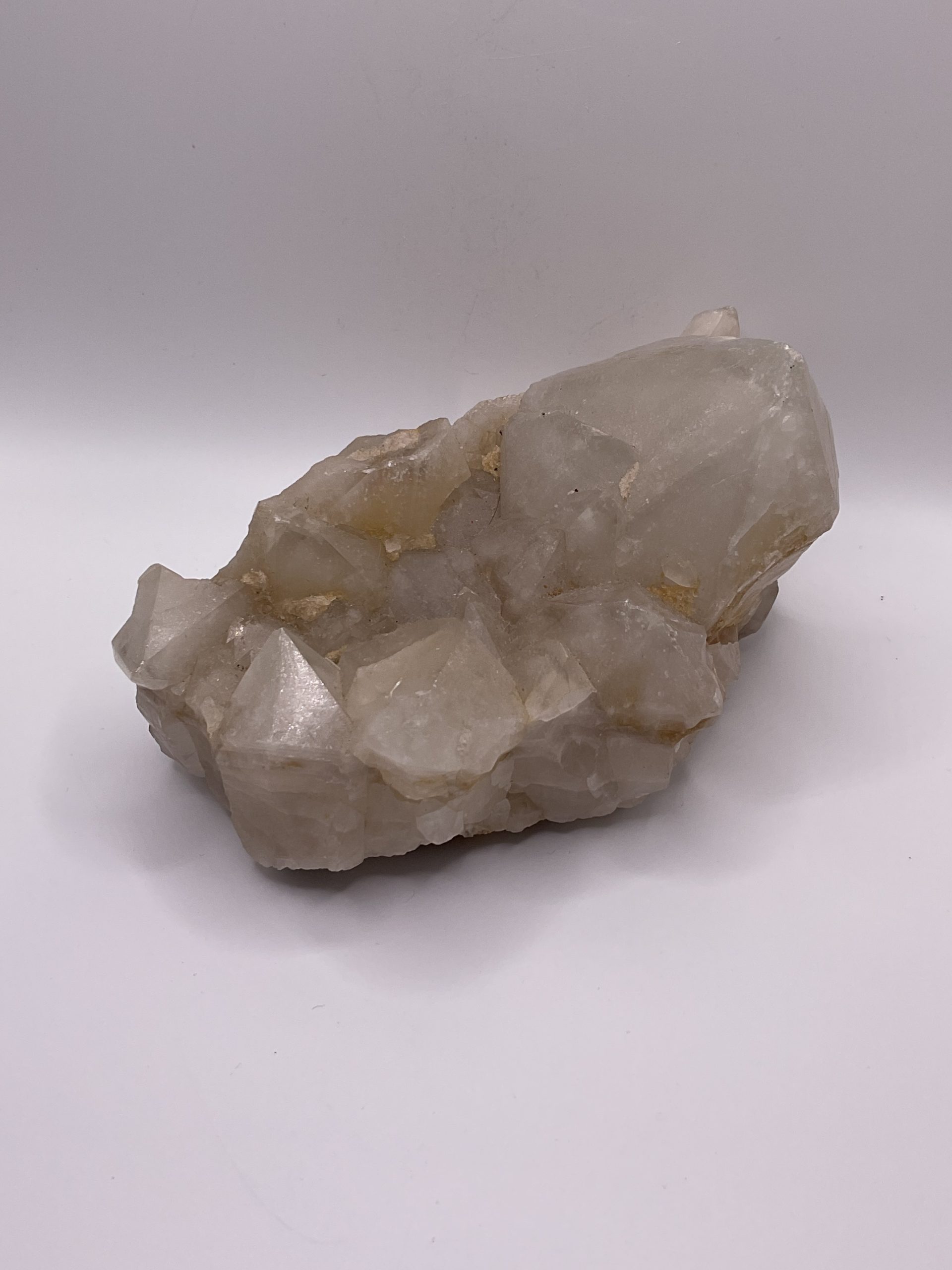
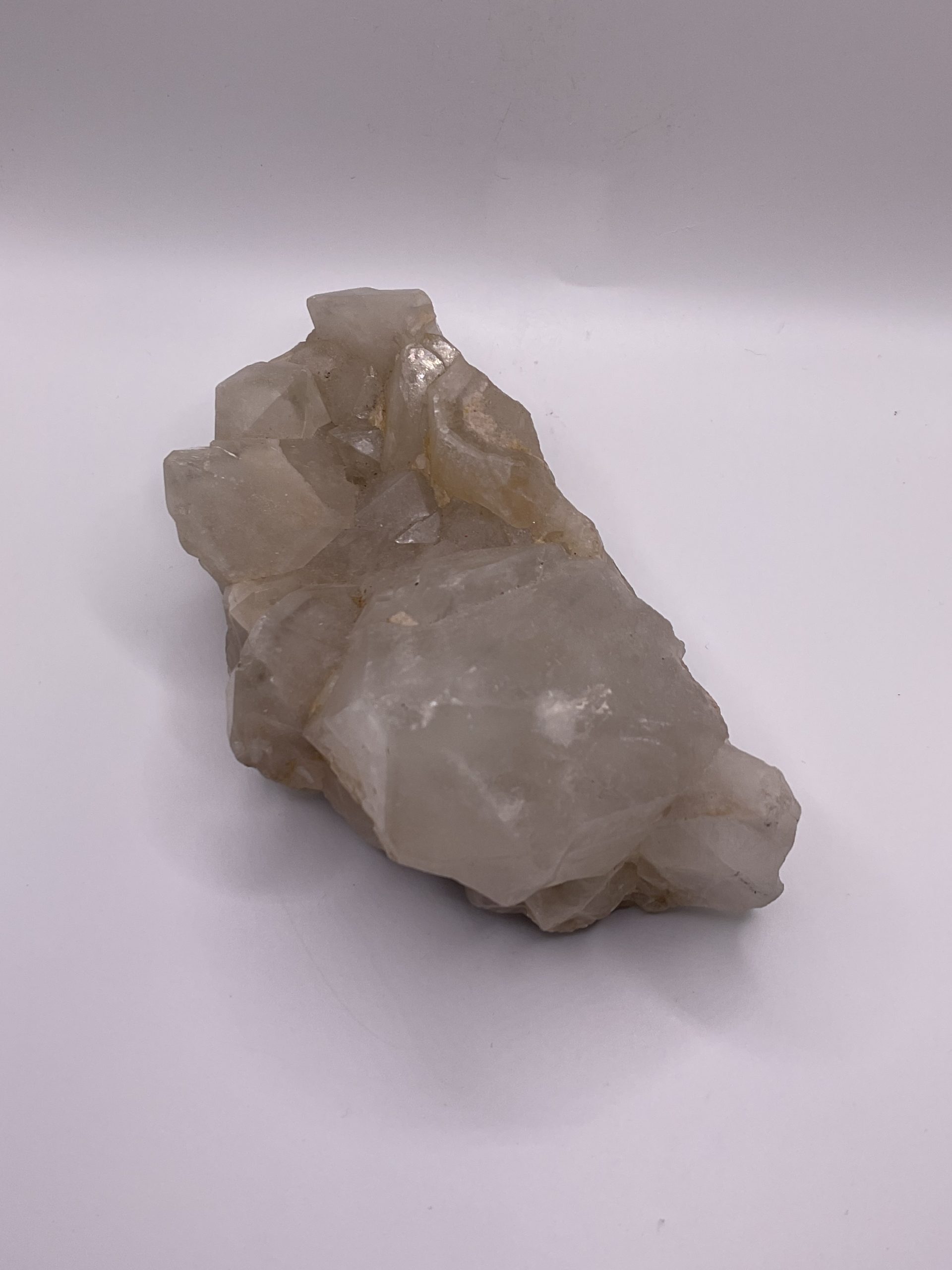
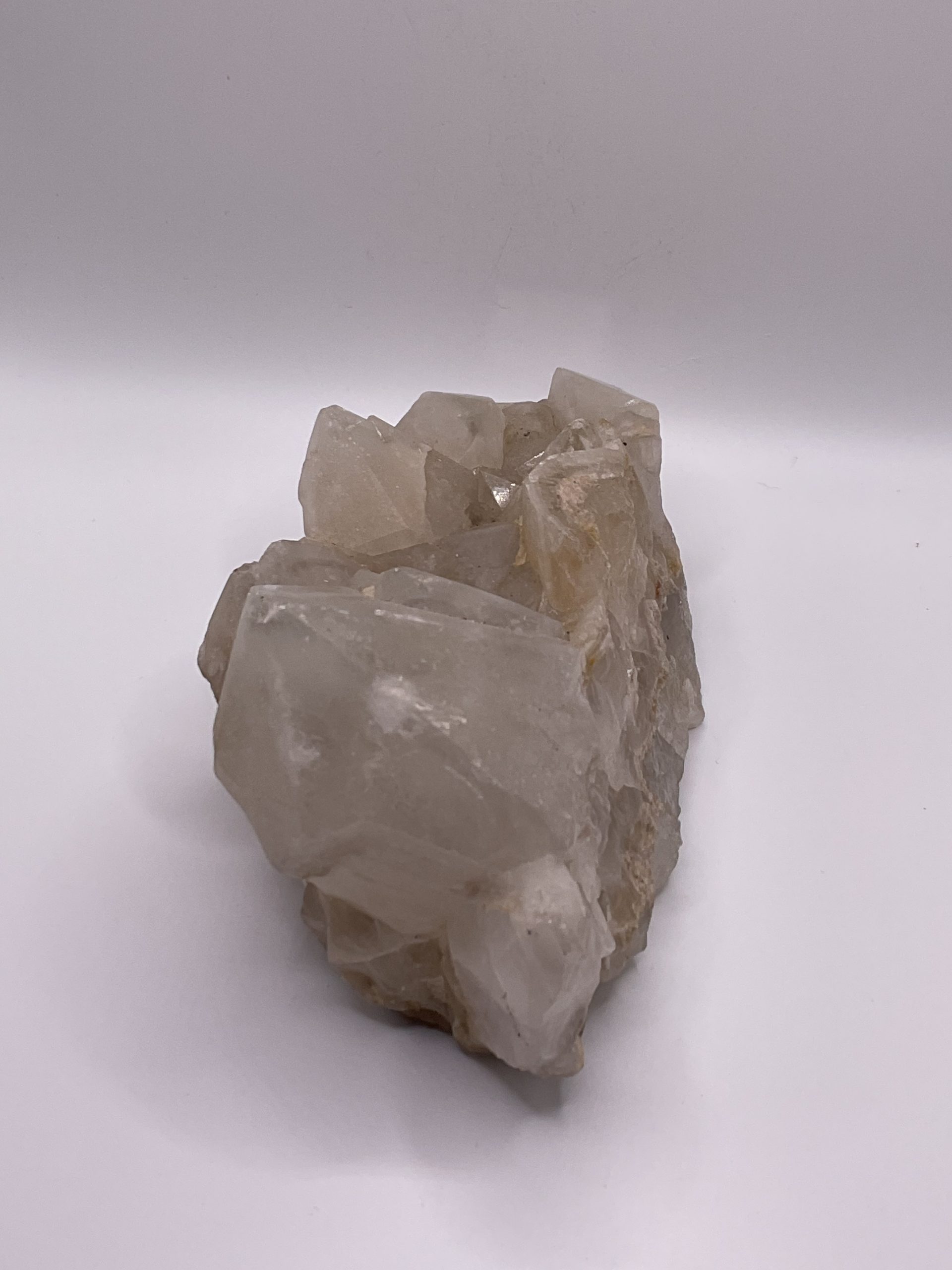
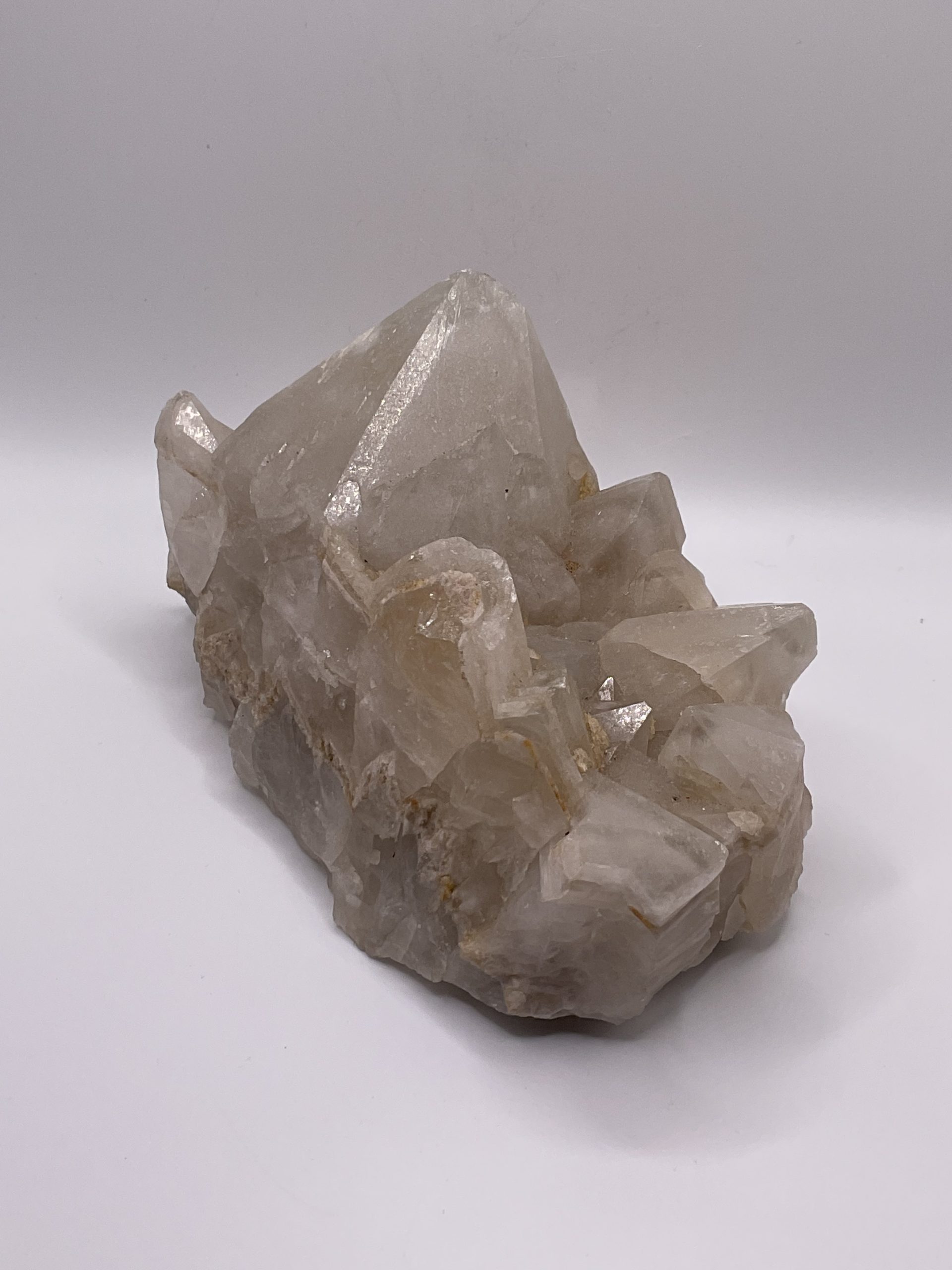
Brazilian quartz points

£60.00

Brazilian quartz points are naturally occurring α-quartz (SiO₂) crystals that crystallize in the trigonal crystal system. They typically form hexagonal prisms terminated by pyramidal faces, representing one of the clearest and most well-developed examples of quartz crystallization globally.

Formation and Geological Context

  • Quartz points from Brazil form primarily in hydrothermal veins, pegmatites, and granitic cavities.

  • Crystallization occurs from silica-saturated aqueous fluids under stable temperature and pressure conditions.

  • Variations in growth rate, fluid chemistry, and supersaturation produce features such as growth zoning, phantom layers, and internal fluid inclusions, which preserve records of changing environmental conditions during formation.

  • Large, clear crystals are indicative of slow, undisturbed crystallization, allowing the development of sharp, well-defined terminations.

Physical and Crystallographic Properties

  • Chemical formula: SiO₂

  • Crystal system: Trigonal

  • Hardness: 7 (Mohs scale)

  • Density: ~2.65 g/cm³

  • Cleavage: None; fracture: conchoidal

  • Luster: Vitreous

Categories: , , Tag:

Description

Brazilian quartz points are naturally formed α-quartz (SiO₂) crystals exhibiting well-defined prismatic habits with sharp terminations. These crystals crystallize in the trigonal crystal system, typically forming hexagonal prisms capped by pyramidal faces.

Formation and Properties

  • Chemical composition: SiO₂

  • Hardness: 7 (Mohs scale)

  • Luster: Vitreous

  • Transparency: Transparent to translucent

  • Cleavage: None; fracture: conchoidal

  • Crystals grow from silica-saturated hydrothermal fluids in pegmatitic or granitic environments. Variations in temperature, pressure, and fluid composition influence the clarity, size, and formation of terminations.

Geological Significance

  • Quartz points from Brazil, particularly from Minas Gerais, are renowned for their large size, clarity, and well-formed terminations.

  • They represent slow, stable crystallization in silica-rich environments over millions of years, often recording subtle growth zoning or fluid inclusions.

Educational Value

  • Excellent examples for studying crystal growth habits, optical properties, and the effects of hydrothermal conditions on mineral formation.

  • Frequently used in mineral collections, teaching specimens, and geological study due to their clarity and well-developed morphology.
Reviews

There are no reviews yet.

Be the first to review “Brazilian quartz points”

Your email address will not be published. Required fields are marked *